
Dr. Tobias Flath defends his dissertation, which contributes to the improvement of 3D printing processes for the production of bone replacement materials.
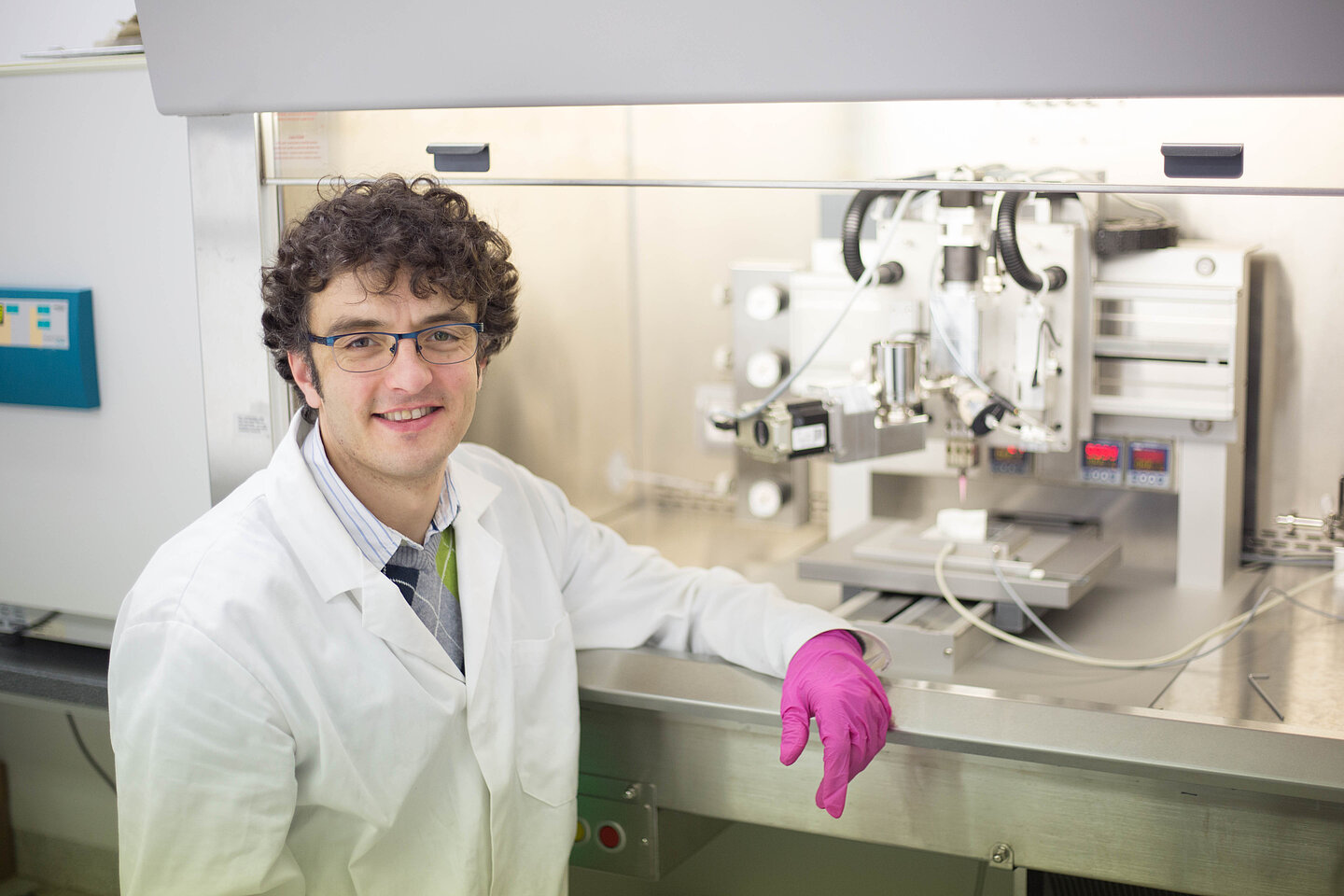
On 26 November 2020, Dr Tobias Flath successfully defended his dissertation at the Faculty of Mechanical Engineering at Dresden University of Technology in a live digital video broadcast. The committee consisted of the chairman Prof. Dr.-Ing. habil. Maik Gude (Faculty of Mechanical Engineering/ TU Dresden), the reviewers Prof. Dr rer. medic. Hans-Peter Wiesmann (Faculty of Mechanical Engineering/ TU Dresden), Prof. Dr.-Ing. Peter Schulze (Faculty of Engineering/ HTWK Leipzig), Prof. Dr.-Ing. habil. Sylvio Simon (Faculty of Mechanical Engineering, Electrical and Energy Systems/ BTU Cottbus - Senftenberg) and member Dr.in-Ing. habil. Christine Schöne (Faculty of Mechanical Engineering/TU Dresden).
With his doctoral thesis "Development of a twin-screw extruder dosing head for 3D printing and its potential using the example of bone replacement materials" , Dr Flath is contributing to the improvement of 3D printing processes in medicine. The dosing head technology (DK) developed by him creates new possibilities for the development of biomaterials and the design of implants.
The research work: 3D printing processes for tissue engineering
The fused layer modelling (FLM) process, a 3D printing process in which pure materials and homogeneous mixtures are printed, has been used for several years in the tissue engineering (TE) of bone replacement materials. Polymer processing takes place under high thermal stress. Pastes, on the other hand, are usually processed at room temperature. Material-specific dispensing heads for thermoplastic polymers or pastes are used for the development of bone replacement tissue for 3D printing of implants.
According to Dr Flath, it is of great interest for biomaterial research in pharmacy and medicine to incorporate medically effective substances using the FLM process. However, with the current FLM processes, it is not yet possible to produce material mixtures during 3D printing in which patient-specific admixtures of additives (growth factors, antibiotics, functionalised peptides, minerals) tailored to the bone defect are mapped, emphasises Flath.
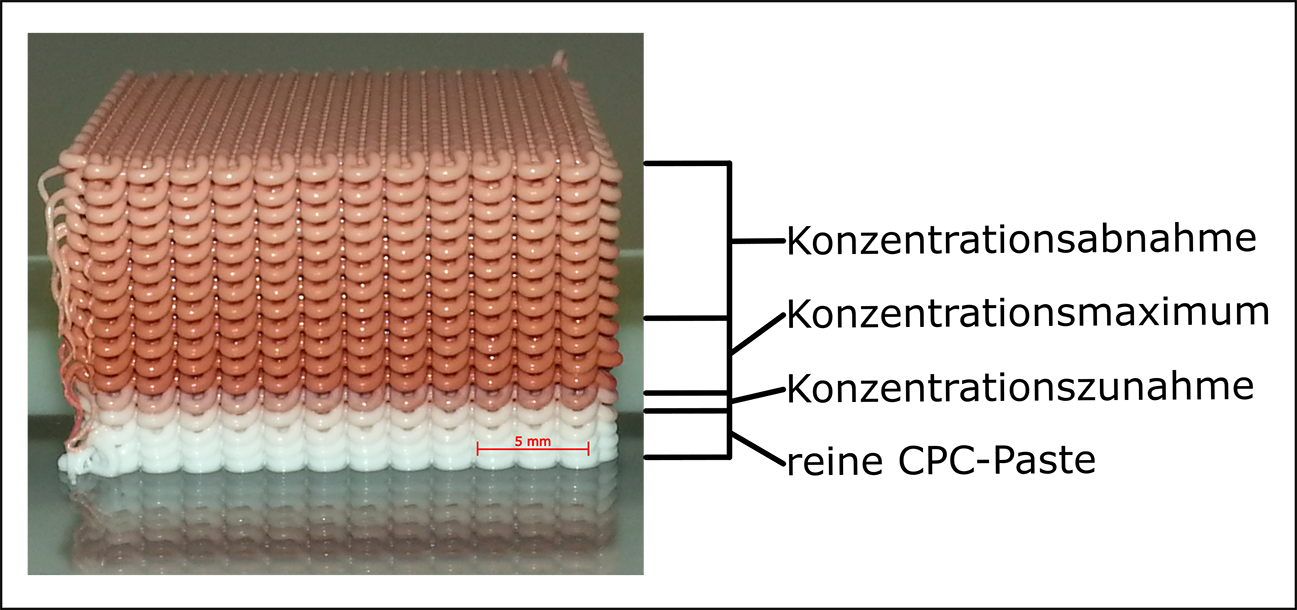
In addition, conventional FLM methods have not yet been able to realise smooth transitions of different mixing proportions (gradients) within an implant in order to map transitions of different tissue types during implant design and to provide different areas within an implant with corresponding additive proportions as required.
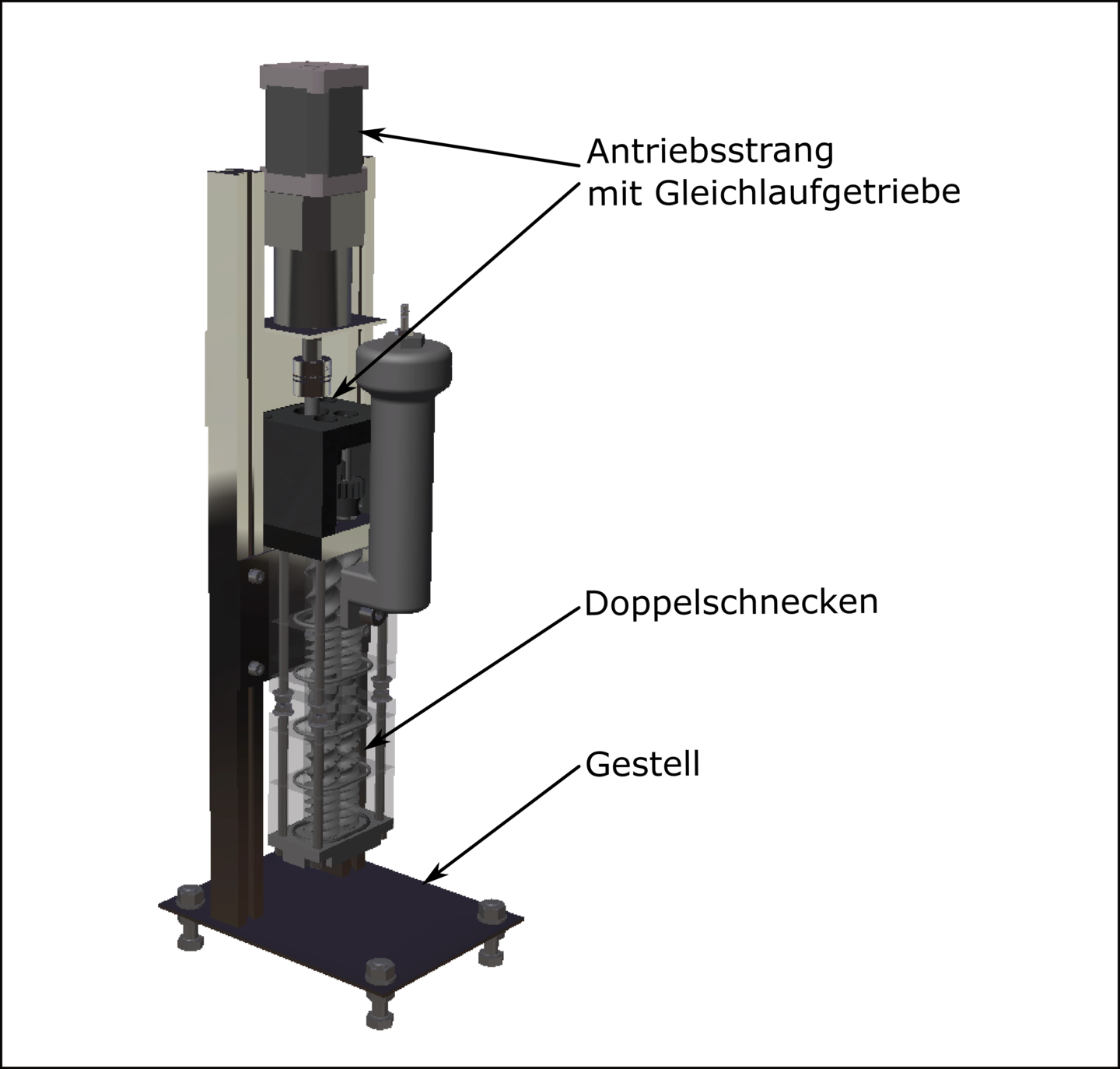
Dr Flath: "The aim of this work is to push the boundaries in order to offer new possibilities for the FLM process in the processing of bone replacement materials. At the centre of the investigation is the question of the conditions under which homogeneous mixtures of different materials can be produced within the FLM process with minimal thermal influence. In addition, the technology is to be applied to a wide range of materials so that solid thermoplastic biopolymers and pasty materials are equally suitable as target materials for processing with the new technology at room temperature. Material gradients are to be investigated for variable mixtures. Coloured powder additives will be used to demonstrate their distribution."
"The result of this work is a new DK technology with an integrated twin-screw extruder for the FLM process, which can be used to produce mixtures of several materials in the printing process. This reduces the process steps upstream of printing and thus also the mechanical and/or thermal load on the materials to be processed," explains Dr Flath.
With the new technology, specific mixture proportions can be assigned to certain implant areas and thus bone replacement materials can be customised specifically to the patient and individually to the requirements of the defect.
The research work was carried out in cooperation with the Faculty of Engineering at HTWK Leipzig, the Chair of Pharmaceutical Technology at the Faculty of Medicine at Leipzig University and the Chair of Biomaterials at TU Dresden.
New research projects by Dr Flath
Dr Flath is currently continuing his research into the application of 3D printing processes for various problems in science and industry.
Flath is working on the optimisation of cooling systems for plastic injection moulding tools and the standardisation of implants for the surgical treatment of craniomaxillofacial fractures.
Further research projects are planned for the development of biomaterials in connection with the technology developed within the dissertation. Preliminary investigations are currently underway.
More about research work & publications of Dr Tobias Flath:
ResearchGate ⭷
ORCiD ⭷
