
HTWK Leipzig, DBI and MITNETZ GAS are testing the suitability of existing gas networks for hydrogen transport in the hydrogen village of Bitterfeld-Wolfen
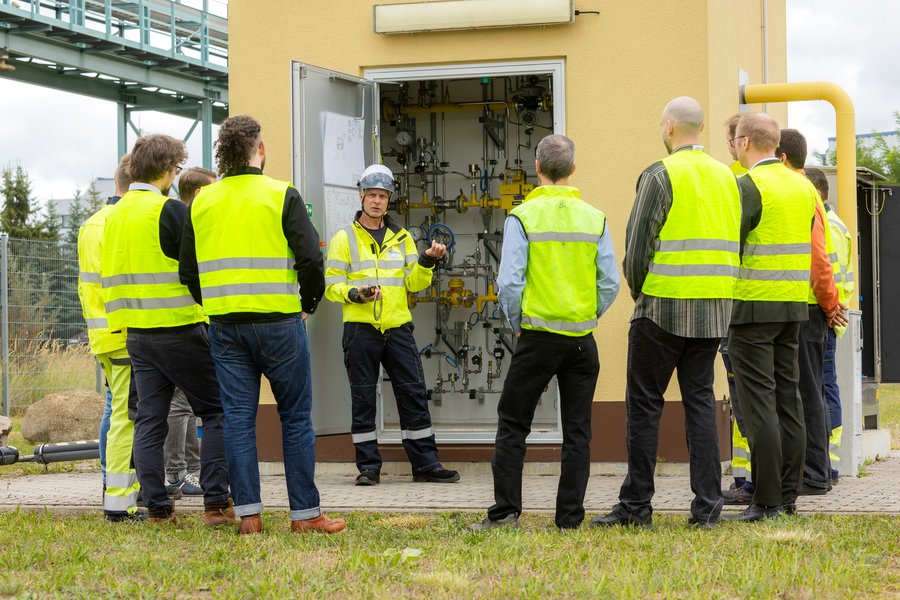
How will gas pipelines and their components behave when hydrogen flows through them in future? The ‘H₂INFRA – H₂ Infrastructure’ research project is providing important insights into this. The Leipzig University of Applied Sciences (HTWK Leipzig), DBI Gas and Environmental Technology and MITNETZ GAS have investigated this in a long-term trial at the hydrogen test facility in Bitterfeld-Wolfen, known as the ‘Hydrogen Village’. The recent completion of the project also marks ten years of joint research into hydrogen supply.
“Hydrogen is regarded as a key component in the transformation of the energy system. However, before it can be reliably transported via pipelines to households, commercial premises and industry, many technical and environmental questions must be resolved. How do existing gas network components perform in continuous operation with hydrogen? How can high gas quality be ensured? And what infrastructure makes economic and environmental sense in the long term?”, says Robert Huhn, Professor of Gas and Heating Networks at HTWK Leipzig, summarising the project’s objective. In the H₂INFRA research project, the project partners jointly investigated the efficient and safe operation of hydrogen distribution networks from 2022 to 2025, with funding from the Federal Ministry for Economic Affairs and Climate Action. The work built on the H2-Netz project, which was launched in 2016. The research partnership can now look back on ten years of joint hydrogen research.
Long-term monitoring of the hydrogen network
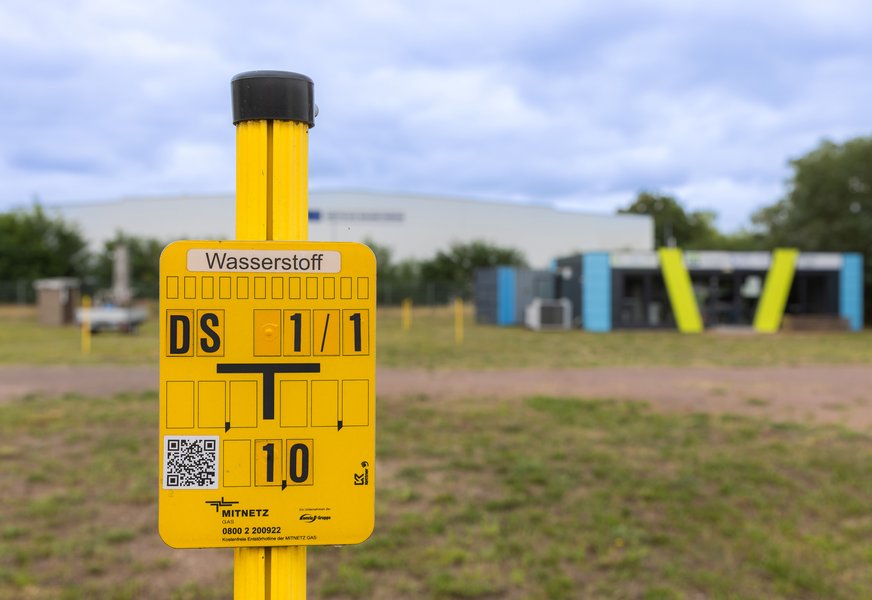
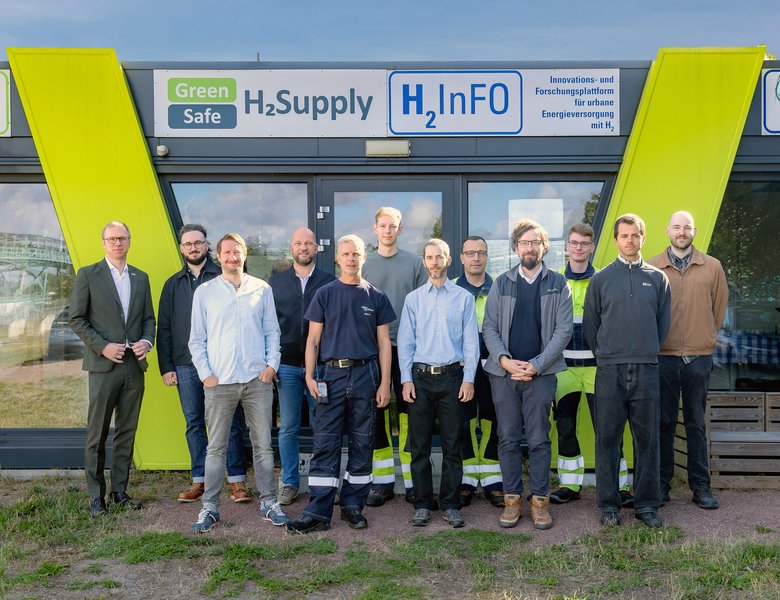
The H₂INFRA project focused on investigating a hydrogen distribution network under realistic operating conditions. Throughout the project, key operating parameters such as pressure, temperature and flow rate were continuously recorded. At the same time, the researchers tested new components from the natural gas sector for their suitability for hydrogen, both in the DBI laboratory and on a component test rig set up specifically for this purpose at the test site. In the so-called research pavilion on the test site, a complete domestic plumbing system featuring a hydrogen water heater was installed and tested in continuous operation for two years. In addition, the researchers examined pipe samples from the network for material structure, ageing and mechanical properties. Safety components such as gas flow monitors and low-gas-pressure safety devices, as well as various shut-off technologies, were also tested.
“What makes our research unique is that we can examine a hydrogen infrastructure – constructed from various materials and spanning several pressure levels, and thus almost complete – over extended periods under conditions that closely resemble real-world scenarios. This enables us to gain insights, for example, into operational management and maintenance that go beyond mere laboratory tests and are directly relevant to the future, safe operation of hydrogen networks,” says Michael Schneider, head of the research project for MITNETZ GAS.
Safety and gas quality as key challenges
The investigations show that the transition to hydrogen requires careful consideration of materials and components. For example, the external leak-tightness tests have shown that almost all the components tested are suitable for use in hydrogen infrastructure. Another key focus was hydrogen quality. Sensitive applications in particular, such as fuel cells, place high demands on the purity of the gas. This was investigated in depth by staff at the DBI. The results showed that, particularly for hydrogen with very high purity requirements, preventing contamination poses a challenge for future distribution networks. Potential sources of contamination were identified, and materials as well as manufacturing and installation processes were examined. From this, measures to minimise impurities were derived.
Life cycle assessment: It is not just the hydrogen itself that counts
In addition to safety and technical suitability, H₂INFRA also examined the environmental and economic aspects of the hydrogen supply. HTWK Leipzig carried out a life cycle assessment of the hydrogen value chain – from production through transport to supply to consumers. A key finding: The electricity used for electrolysis is decisive for the greenhouse gas footprint of hydrogen production. By contrast, the manufacture and construction of the electrolysers contribute comparatively little to the overall result. Among the scenarios examined, electrolysis using wind power resulted in the lowest greenhouse gas emissions. At the same time, the study shows that even ‘green’ hydrogen is not automatically emission-free, as further environmental impacts arise throughout the entire value chain. There are also environmental levers to be adjusted when it comes to the pipelines themselves. Pipe material, pipe dimensions and laying methods have a significant influence on the environmental footprint.
From the H₂ network to H₂INFRA – and beyond
The research collaboration between HTWK Leipzig, DBI and MITNETZ GAS, which has now been running for ten years, began in 2016 with the H₂-Netz project, which focused, amongst other things, on the scientific monitoring of a hydrogen distribution network and the environmental and economic assessment of various infrastructure options. H₂INFRA continued this work and expanded it to include investigations into the long-term behaviour of components, gas quality, safety and life-cycle assessment. The research is now continuing: in the follow-up project, SafeH2Supply, which began in 2025, investigations are being carried out into, amongst other things, the safe supply of hydrogen, odourisation, gas quality and the environmental impacts of the infrastructure. GreenH2Supply, which began in 2026, is addressing the conversion of existing natural gas networks to hydrogen operation, as well as the safe and efficient piped supply of hydrogen to power stations, industry and commercial sectors. In this way, the research partnership not only provides insights into individual components but also establishes a scientific basis for determining how hydrogen infrastructures can be planned and operated safely, economically and as environmentally sustainably as possible in the future.
Open Days
The Bitterfeld-Wolfen Hydrogen Village offers regular free guided tours of the test site. The next dates, subject to registration, are 9 September 2026, 14 October 2026 and 11 November 2026, from 10 am to 12 noon on each occasion.
To register: https://event.enviam-gruppe.de/microsite/index.cfm?l=2425&modus=
Address: Chlorstraße, 06749 Bitterfeld-Wolfen
For the H2INFRA final report: https://doi.org/10.34657/37503
