The Leipzig Research and Transfer Centre e. V. at HTWK Leipzig supports the industrial upscaling of innovative carbon concrete technology
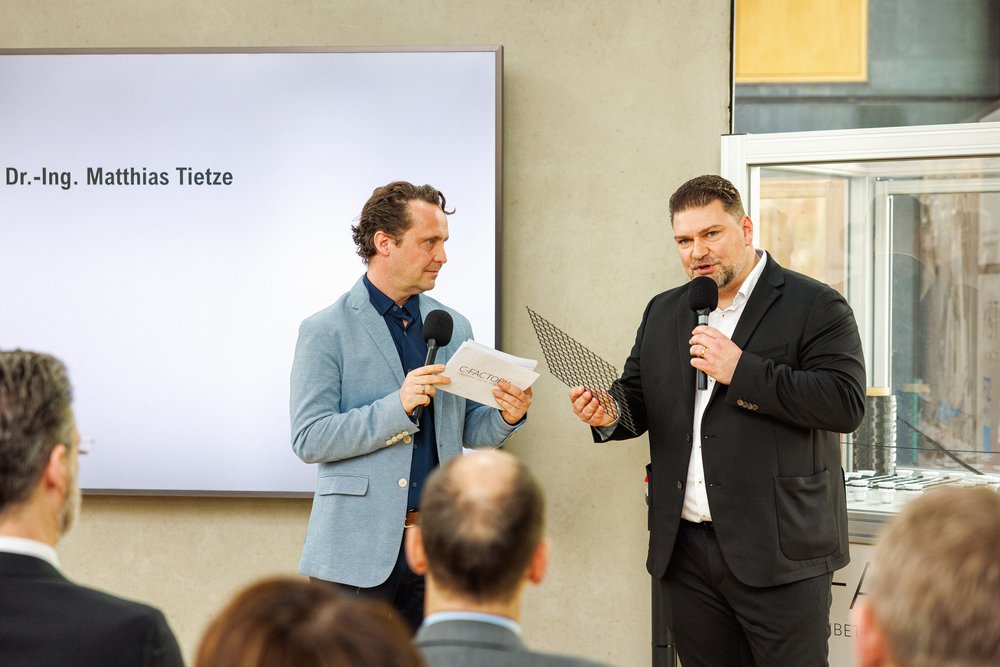
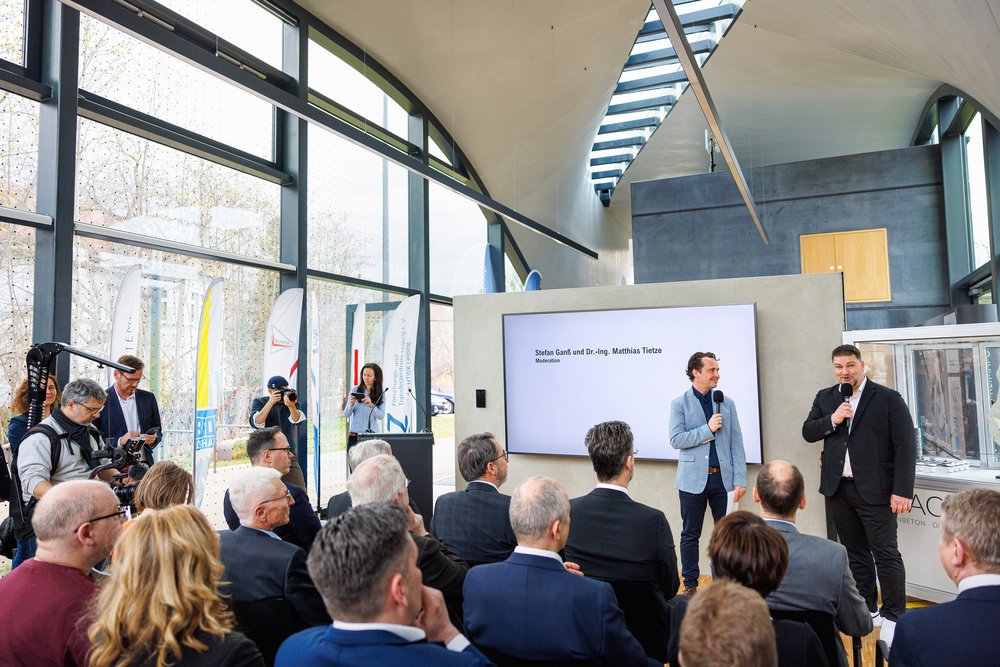
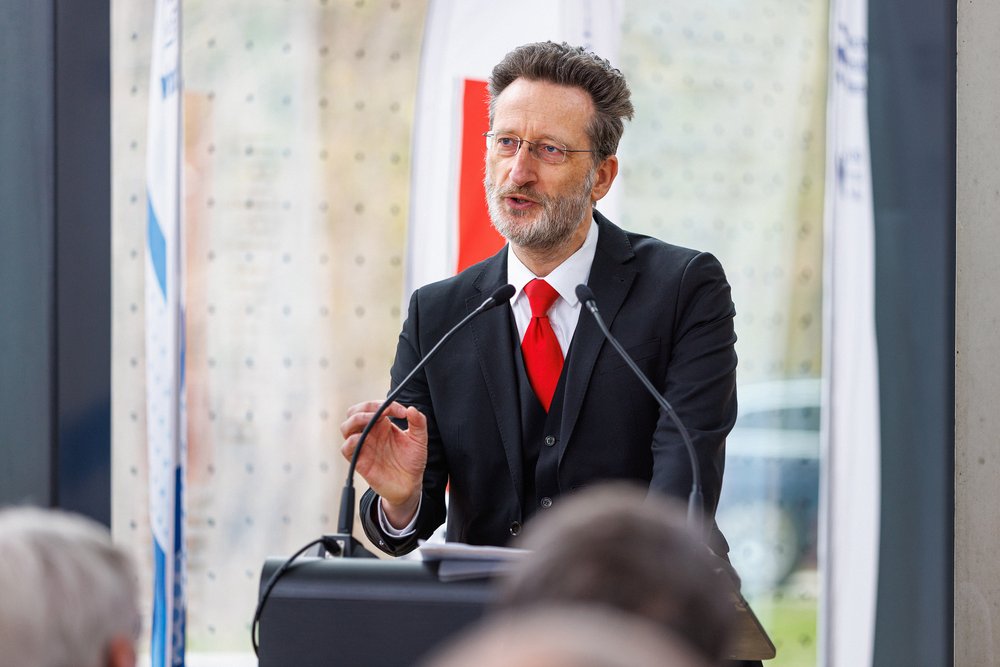
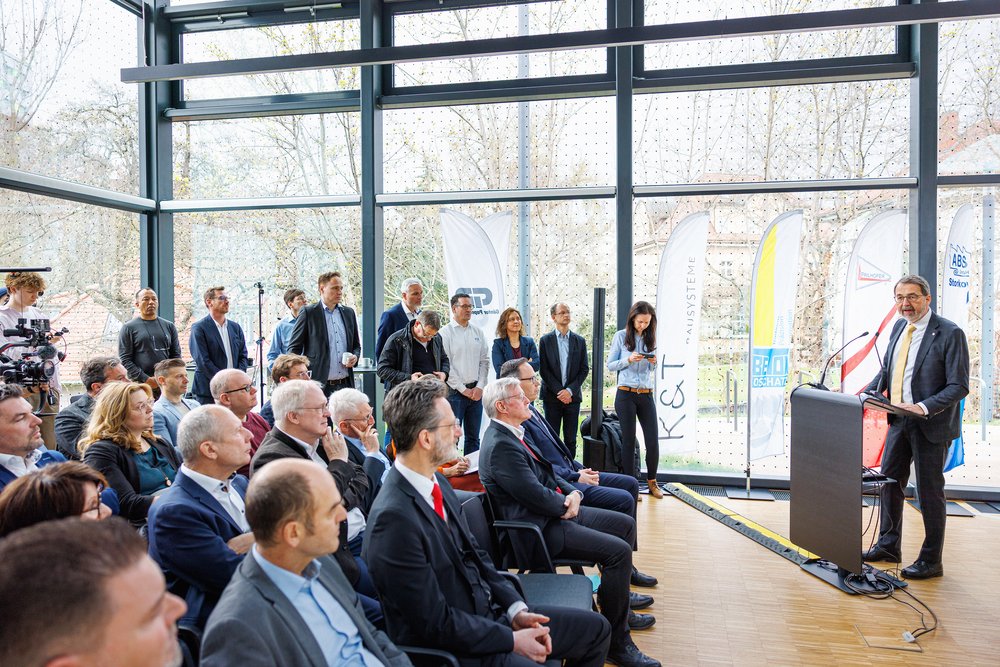
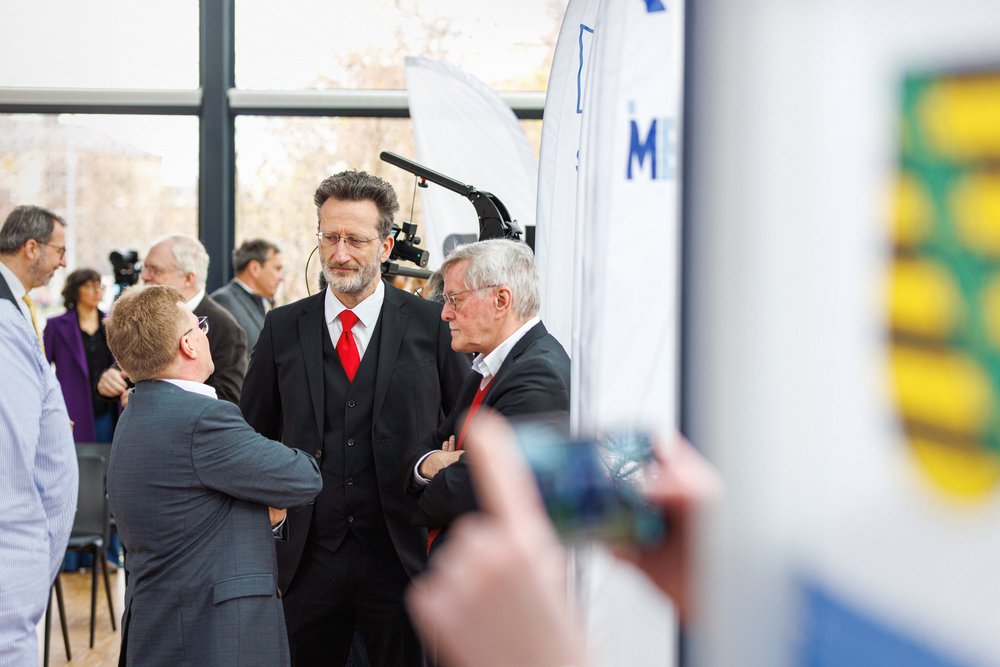
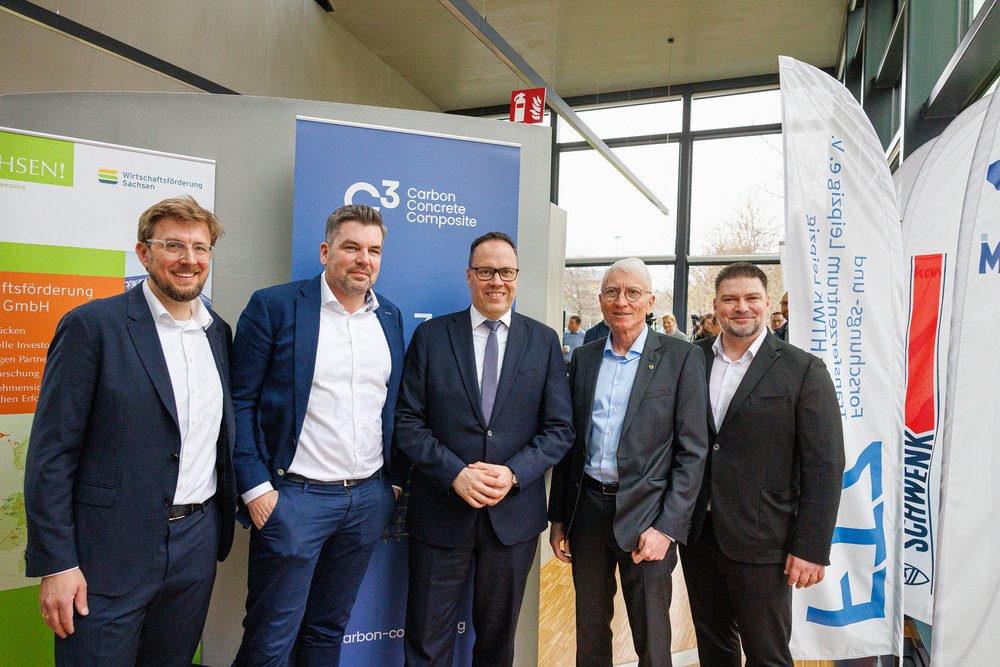
The ‘C-Factory’ marks the start of a forward-looking industrial policy project in Saxony aimed at climate-friendly construction. The official launch of the project took place today during a press event at the CUBE in Dresden, attended by Dirk Panter, Saxony’s Minister of State for Economic Affairs, Labour, Energy and Climate Protection. The aim is to establish the world’s first carbon concrete plant for the fully automated production of CO₂-storing carbon concrete components for building construction.
The joint project is being funded with around 14 million euros by the Federal Ministry for Economic Affairs and Energy (BMWE) as part of the Federal Funding Programme for Industry and Climate Protection (BIK) and will run until the end of 2029.
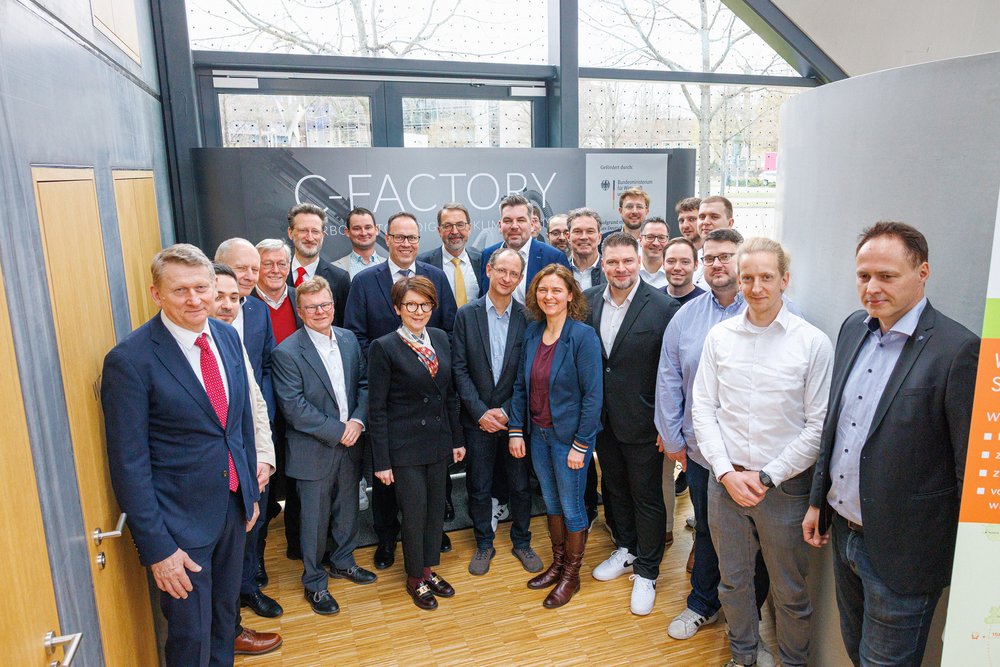
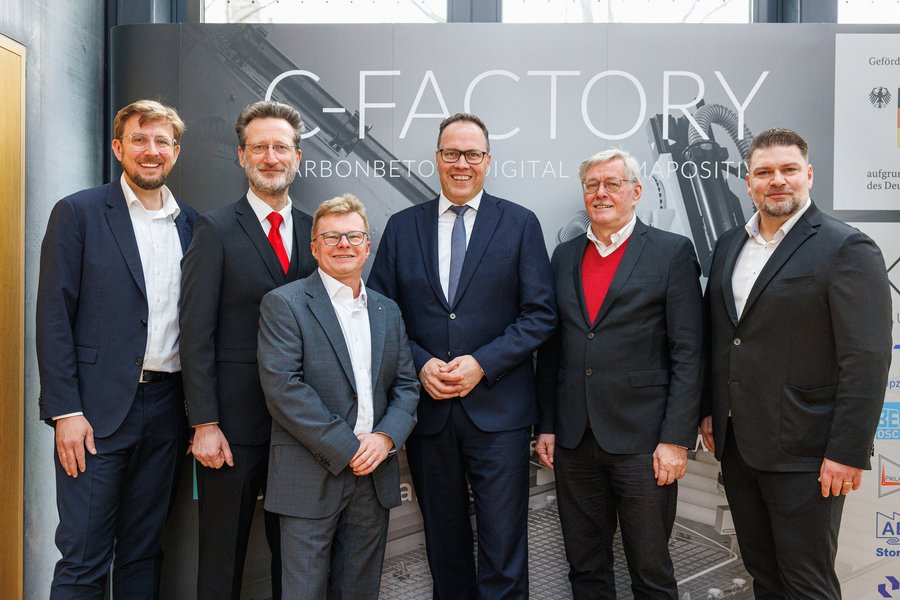
The project is being initiated and coordinated by Kahnt & Tietze GmbH of Leipzig. Together with partners from industry and academia, an interdisciplinary consortium is being formed, comprising, amongst others, Betonwerk Oschatz GmbH, SCHWENK Zement GmbH & Co. KG, Prilhofer Consulting GmbH & Co. KG, ABS Storkow GmbH, the Leipzig Research and Transfer Centre e. V. at the Leipzig University of Applied Sciences, and Dresden University of Technology.
From research to industrial application
The construction, erection, modernisation and operation of residential and non-residential buildings account for 40 per cent of greenhouse gas emissions in Germany.
Carbon concrete enables significantly slimmer, lighter and more durable structural elements than traditional reinforced concrete construction. As carbon does not corrode, the concrete cover can be significantly reduced, leading to a substantial decrease in the quantities of cement, gravel and sand required. Overall, this already enables savings of up to 80 per cent in resource use today.
In combination with CO₂-mineralised aggregates and additional CO₂-storing materials, components produced at the C-Factory will in future even serve as carbon sinks.
Carbon concrete construction has been the subject of intensive research over the past two decades and has been successfully tested in initial construction projects – including the Carbon Concrete CUBE in Dresden, the world’s first building made of carbon concrete. The automated manufacturing processes used there were developed and tested at theCarbon Concrete Technical Centre Germany at the FTZ of HTWK Leipzig. The C-Factory now marks the decisive step: the transition of this technology to industrial, scalable production.

C-Factory – Prototype, fully automated production line
The establishment of the C-Factory will see the development of the first prototype, fully automated production line for large-format carbon concrete components, as well as the first-ever integration of CO₂-storing building materials.
Over the next four years, the pilot plant in Leipzig will be built, commissioned and used to manufacture various demonstration components. It will serve as a benchmark for future carbon concrete plants and as the basis for the industrial scaling of a climate-friendly construction method. The components and production processes developed at the C-Factory can be transferred to different sites.
Panter: Research transfer in practice
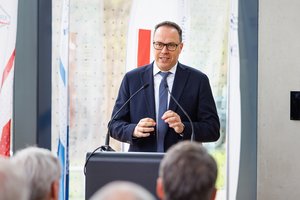
Dirk Panter, Saxony’s Minister of State for Economic Affairs, Labour, Energy and Climate Protection, hails the project as an important contribution to industrial transformation: “Saxony is proving that climate protection and competitiveness can go hand in hand. The fact that buildings can be used as CO₂ sinks in future is revolutionary in terms of industrial transformation and climate protection. The C-Factory is an exemplary model of research transfer in practice, Saxony’s spirit of innovation and increased efficiency.”
The “C-Factory” collaborative project is the largest Saxon project from the first round of BIK funding and is coordinated by Kahnt & Tietze GmbH as the consortium leader. Since 2014, the company has also received funding from Saxony’s technology support programmes, which form the basis for the C-Factory currently under construction.
Panter emphasises: “It makes me proud that, in this case too, our technology funding has successfully spurred on an innovative Saxon development and is being put into practice in Leipzig. Technology funding is more than just a tool for economic development. It also helps to retain bright minds here in the region and attract new ones.”
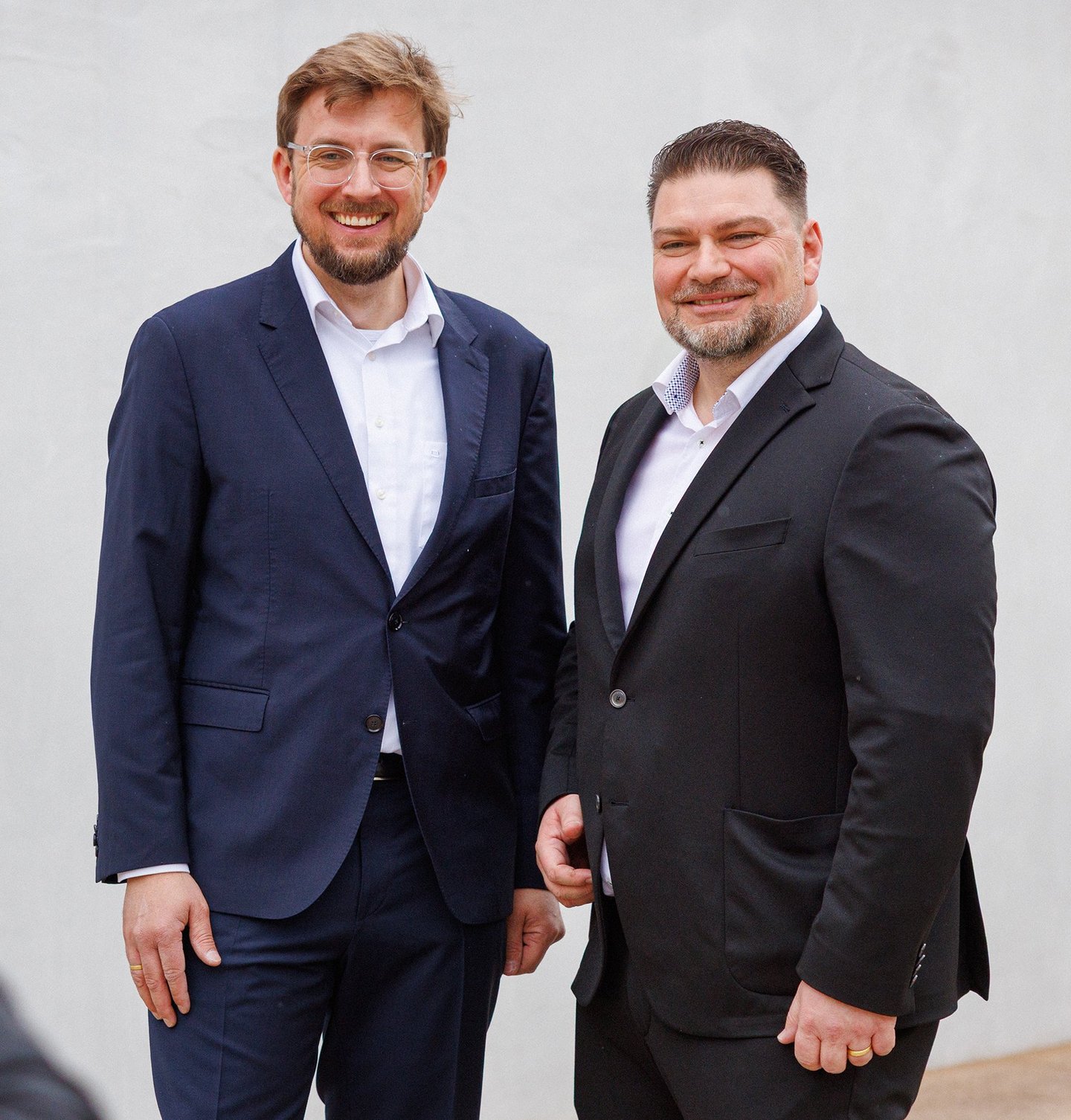
Consortium leadership
Dr Alexander Kahnt, Managing Director of Kahnt & Tietze GmbH, explains: “The success of this project is down to the outstanding work of my team in Leipzig. We are all motivated by the goal of significantly reducing emissions in the construction industry with the C-Factory.”
Dr.-Ing. Matthias Tietze, also Managing Director of Kahnt & Tietze GmbH, adds: “We are bringing a technology – which until now has mainly existed in research and pilot projects – into industrial reality. With the C-Factory, we are laying the foundations for the cost-effective and scalable construction of buildings.”
Both managing directors studied at HTWK Leipzig and completed their doctoral degrees through a collaborative programme at TU Dresden. Dr Alexander Kahnt, Eng., laid the foundations in building physics and structural engineering for slim carbon concrete components with his doctoral thesis on ‘The Building Envelope of the Future’. Dr.-Ing. Matthias Tietze completed his doctoral thesis on the topic ‘The economic value chain of carbon concrete – using the example of double-wall semi-precast construction’ and focused on the cost-effective implementation of this construction method.
After completing his studies, Dr.-Ing. Tietze worked at TU Dresden on the C3 – Carbon Concrete Composite project at the Institute of Solid Construction under the supervision of Prof. Dr.-Ing. Manfred Curbach. Kahnt established the ‘Sustainable Construction’ research group at the Institute of Concrete Structures at HTWK Leipzig under the leadership of Prof. Dr.-Ing. Klaus Holschemacher.
For many years, they have all been united by the goal of transferring carbon concrete construction from research into practical application.
Together, they founded Kahnt & Tietze GmbH, based at HTWK Leipzig, to implement new materials, construction methods and manufacturing technologies on an industrial scale at the C-Factory.
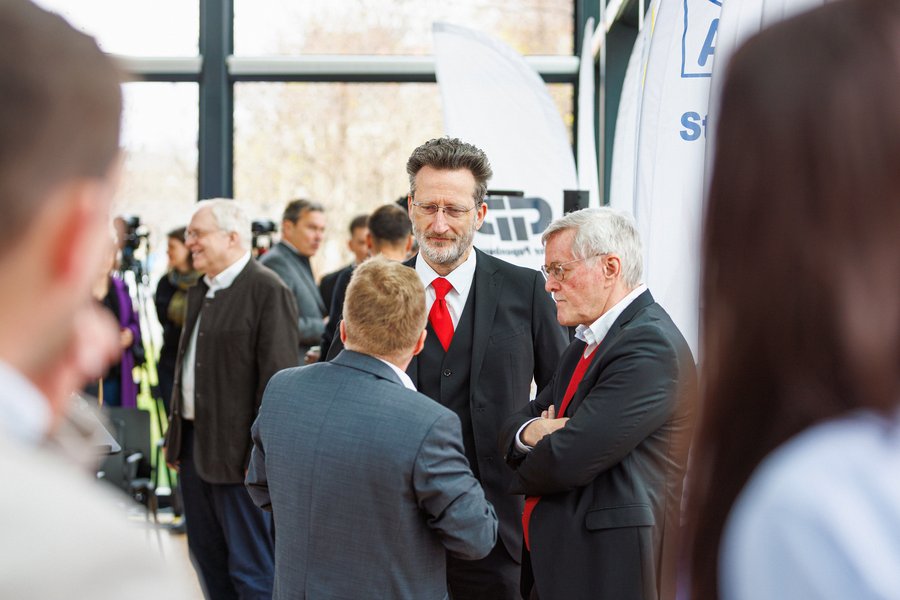
The Leipzig Research and Transfer Centre (Forschungs- und Transferzentrum Leipzig e. V.) at HTWK Leipzig is supporting the industrial upscaling of innovative carbon concrete technology
HTWK Leipzig is contributing to the development of the C-Factory through its Research and Transfer Centre (FTZ). Since 2014 – with funding from the Carbon Concrete Composite (C3) research initiative – researchers have been developing carbon concrete construction methods in numerous individual projects. With the opening of the university’s Carbon Concrete Technology Centre Germany in 2022, researchers were able to design and test manufacturing processes for the new components. At the Carbon Concrete Technology Centre Germany, staff from the Institute of Concrete Structures, led by Prof. Dr.-Ing. Klaus Holschemacher, are working on an interdisciplinary basis with the Institute of Process Automation and Embedded Systems, led by Prof. Dr.-Ing. Tilo Heimbold.
The C-Factory now marks the decisive step towards widespread application. Kahnt & Tietze GmbH, a spin-off from HTWK Leipzig, is acting as the initiator and is taking the lead in the consortium. This move to bridge the gap to the market is to be achieved in particular through close collaboration between the FTZ at HTWK Leipzig and Kahnt & Tietze GmbH, as well as with other partners, in order to systematically expand the continuous automation of key process steps.
Prof. Dr.-Ing. Klaus Holschemacher, Director of the Institute for Concrete Structures (IfB) at HTWK Leipzig, explains: “With the Carbon Concrete Technology Centre Germany, we have been able to combine the theoretical foundations developed in Leipzig as part of the various C3 research projects on carbon concrete with the requirements of a practical, automated manufacturing technology. The building material that gives the technical centre its name is more resource-efficient and durable than the reinforced concrete used worldwide to date; it is also recyclable and can even be used for multiple purposes.”
For the FTZ, the project represents an important milestone in technology transfer. The manufacturing processes for producing carbon concrete components – the development of which was supported in particular by research funding from the Saxon State Ministry of Science, Culture and Tourism – are thus being translated into marketable applications.
Prof. Dr.-Ing. Tilo Heimbold, project manager of the C-Factory and also scientific director of the Research and Transfer Centre, explains: “We have many years’ experience in the automation of manufacturing processes for industry. In this project, we are specifically applying this experience to the construction sector in order to increase productivity and quality whilst reducing emissions. In doing so, we are laying the vital foundations for Germany to remain competitive as a business location.”
(Kopie 32)