
Professor Geise gave expert interviews in *DIE ZEIT* and the *LVZ*, explaining the challenges of drone defence
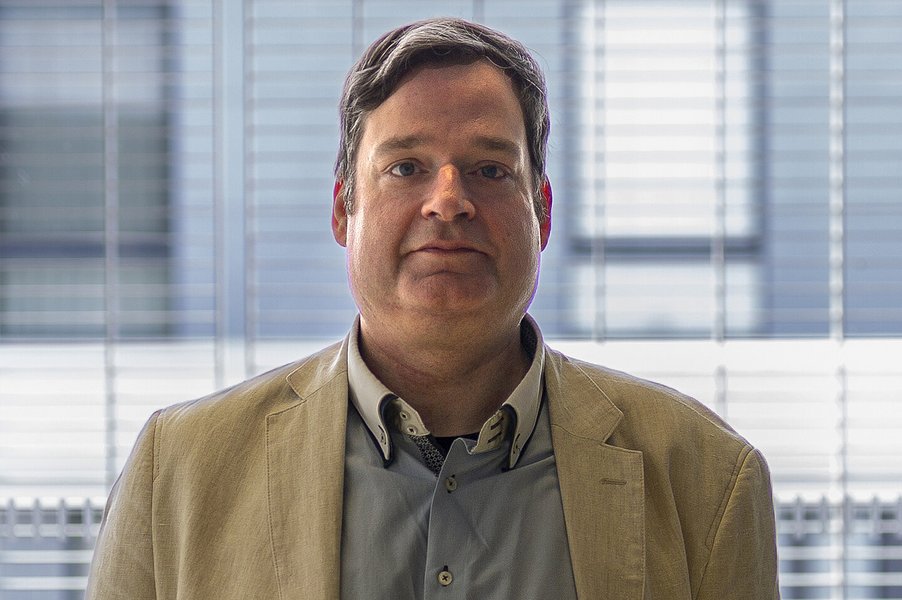
Following the drone incident at Leipzig/Halle Airport, the expertise of Prof. Dr Robert Geise, Professor of Electrical Engineering, Computer Engineering and Electromagnetic Compatibility at HTWK Leipzig, was sought. Both DIE ZEIT and the Leipziger Volkszeitung (LVZ) spoke to the scientist about the technical possibilities and limitations of drone detection, as well as the challenges involved in protecting critical infrastructure.
The interviews focused on the question of how a drone laden with explosives could have approached an aeroplane unnoticed. Geise explained that conventional radar systems at airports are only of limited use for detecting small drones. This is due to physical constraints: drones fly at low altitudes, are often made of materials that reflect little light, and are significantly smaller than aeroplanes. Even modern sensor technology cannot fully overcome these limitations.
The HTWK professor also made it clear that effective drone defence requires more than just more powerful sensors. The available reaction time is often only a few minutes, whilst legal and organisational issues must also be taken into account when considering possible defence measures. Autonomous drones also pose new challenges for existing detection systems, as they can be operated without a continuous radio link.
Research at the Faculty of Digital Transformation
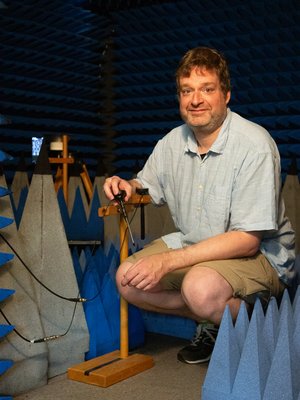
As well as discussing the current case, Geise referred to research being carried out at the Faculty of Digital Transformation at HTWK Leipzig. Among other things, work is being done there on methods that utilise existing mobile communications infrastructure to detect the flight movements of small drones. The aim is to make intelligent use of existing technical systems and thus develop new approaches to airspace surveillance.
Prof. Dr Robert Geise teaches electrical engineering, computer engineering and electromagnetic compatibility at HTWK Leipzig. His research focuses, amongst other things, on the areas of antenna design, measurement technology, navigation systems and radio interference analysis. He recently opened a new laboratory for high-frequency measurement technology involving drones at his faculty.
About the Communication Technology research focus
About the Expert Group for High-Frequency Technology and Radio Communications – HFX
