
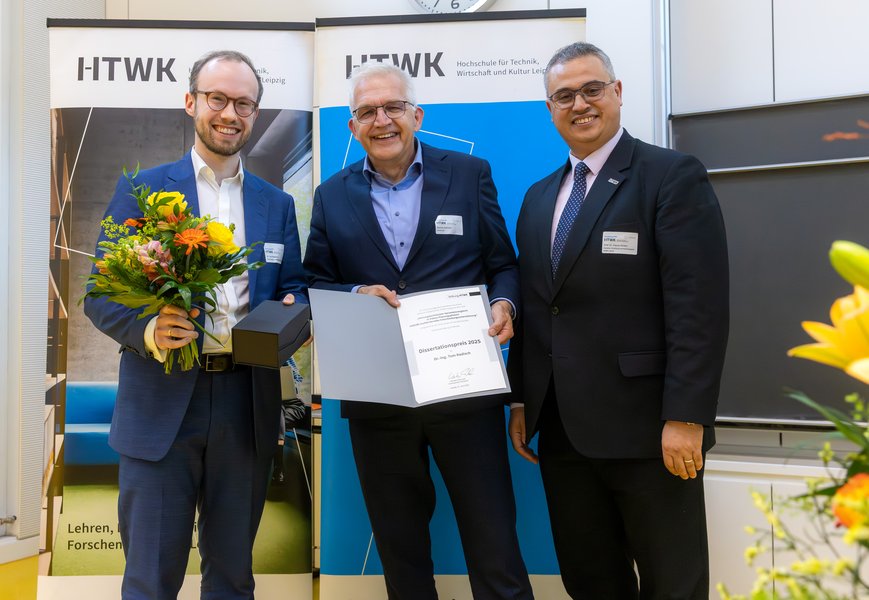
Dr Tom Radisch was awarded the HTWK Foundation’s 2025 Dissertation Prize for his research into the implementation of the energy transition in the heating sector
When buildings were being planned a good 20 years ago, it quickly became clear that heating would be provided by oil or gas. Today, there is a wider range of heating systems to choose from, many of which are increasingly based on renewable energy sources, such as heat pumps, pellet boilers, solar thermal systems or district heating. Choosing a heating system is an important, long-term decision that must be made at an early stage and usually remains in place for several decades. Making changes later on is generally very labour-intensive and expensive. But how do planners determine which heating system is best suited to a particular building?
Dr.-Ing. Tom Radisch presented a method enabling planners to identify the most suitable heating system for a building at an early stage in his doctoral thesis on the topic ‘Comparison of heating system variants in early planning phases using multi-criteria decision support’. He wrote the thesis, which was awarded the distinction ‘summa cum laude’, as part of a collaborative project between HTWK Leipzig and Dresden University of Technology (TU Dresden). In recognition of this research achievement, the HTWK Foundation honoured him with the 2025 Dissertation Prize. His supervisors were Prof. Dr.-Ing. John Grunewald from the Institute of Building Climate at TU Dresden and Prof. emer. Dr.-Ing. Ulrich Möller from the Faculty of Civil Engineering at HTWK Leipzig.
A basis for decision-making has been established for planners
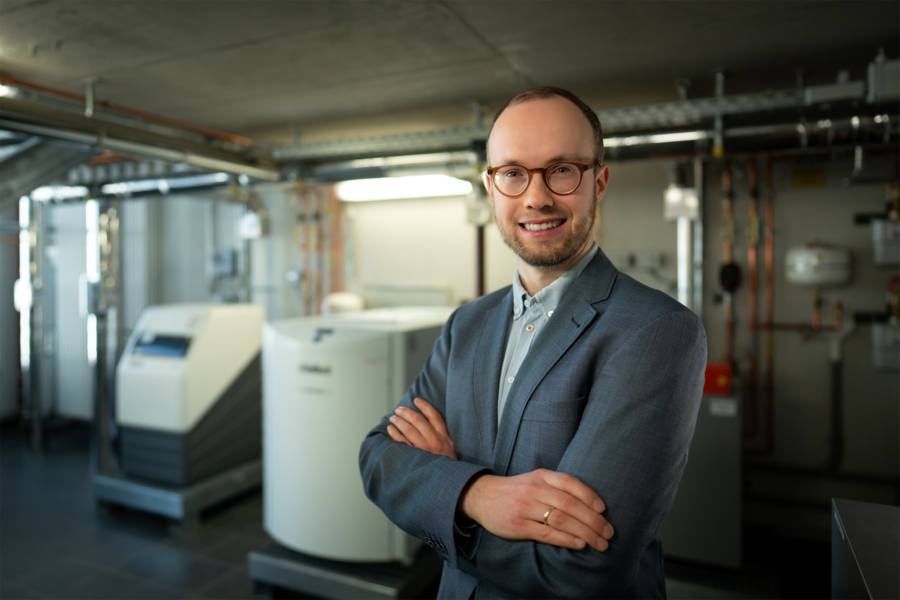
“When we start planning a building today, it is often still unclear how it is to be heated,” says Radisch. In construction practice, decisions are sometimes made too late, are based on gross oversimplifications, or do not meet the clients’ requirements. For clients, when choosing a heating system, aspects such as security of supply, environmental friendliness and comfort are increasingly taking centre stage alongside cost, and these factors need to be reconciled. To this end, Radisch has developed a method based on multi-criteria decision support. This allows him to break down the complexity of the options and influencing factors in order to create a sound basis for decision-making.
The choice of heating system should be made as early as possible in the planning process in order to keep costs and effort to a minimum. In a case study, he presents six possible heating systems for a block of flats as examples and demonstrates how building and system simulations can be used to assess at an early stage which heating system is best suited to the building. The heating systems differ not only in terms of heat generation – where, for example, various heat pump systems, district heating, pellet heating or solar thermal systems are compared – but also in terms of the systems used for heat storage and distribution within the building.
Current scope of application: municipal heating planning
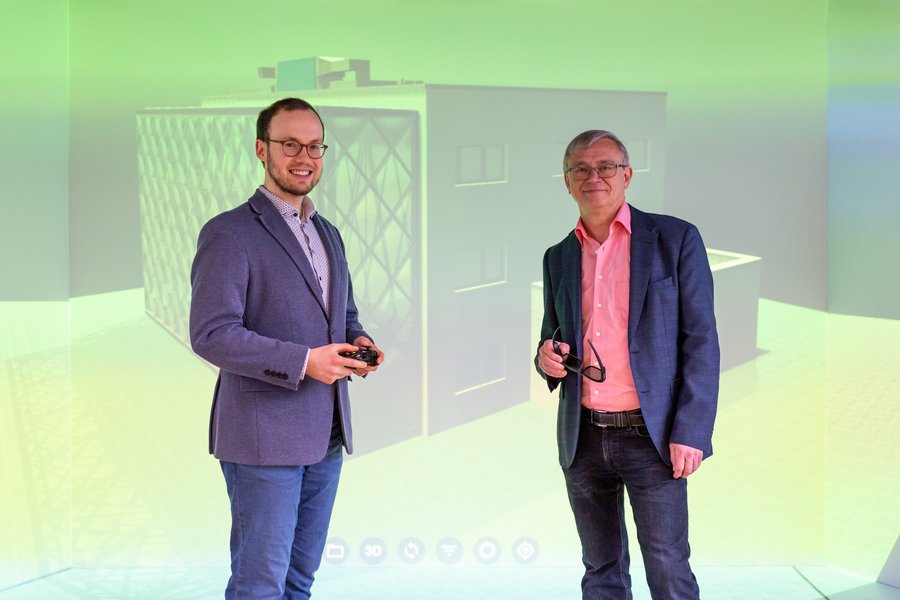
As a graduate in energy, building and environmental engineering, he had already been working with building models and design methods during his studies and subsequently as a research assistant on the ‘DigiTransSachs’ research project, in which Radisch supported companies in implementing Building Information Modelling (BIM) design methods. His new planning and selection method enables a targeted approach within the transformation process and can support building designers, building physicists and other professionals involved in building services engineering in improving the quality of building design, whilst taking into account the legal, technological and financial framework conditions.
He now applies the insights gained from his work in planning practice as an employee of an engineering consultancy. “One current area of application is municipal heating planning, under which all 10,000 local authorities in Germany must develop a strategy by 2028 for how heat supply will be provided exclusively using renewable energies from 2045 onwards,” says Radisch. He remains affiliated with the university as a research assistant at Prof. Gero Guzek’s Chair of Building Energy Technology. There, he is conducting research into how buildings can be equipped with the best possible heating system.
