The 2021 Long Night of Science at HTWK Leipzig was fun, informative and interactive
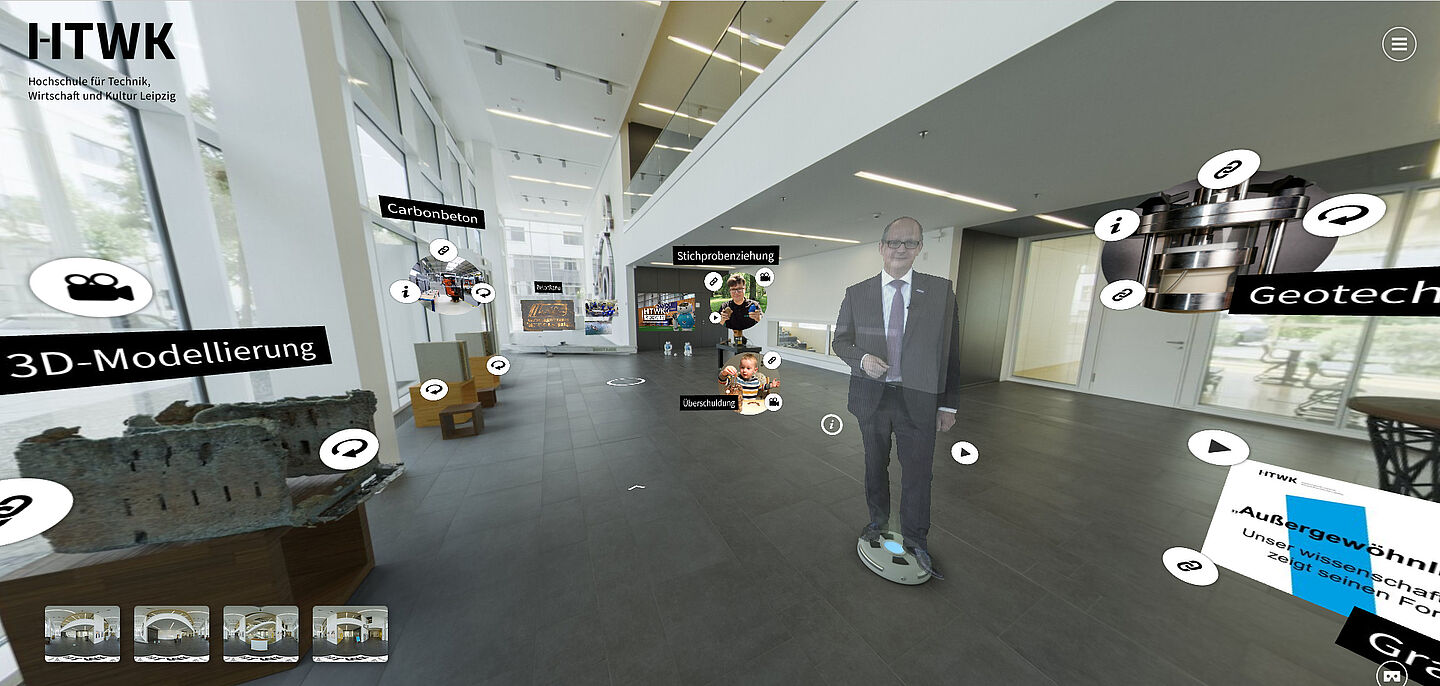
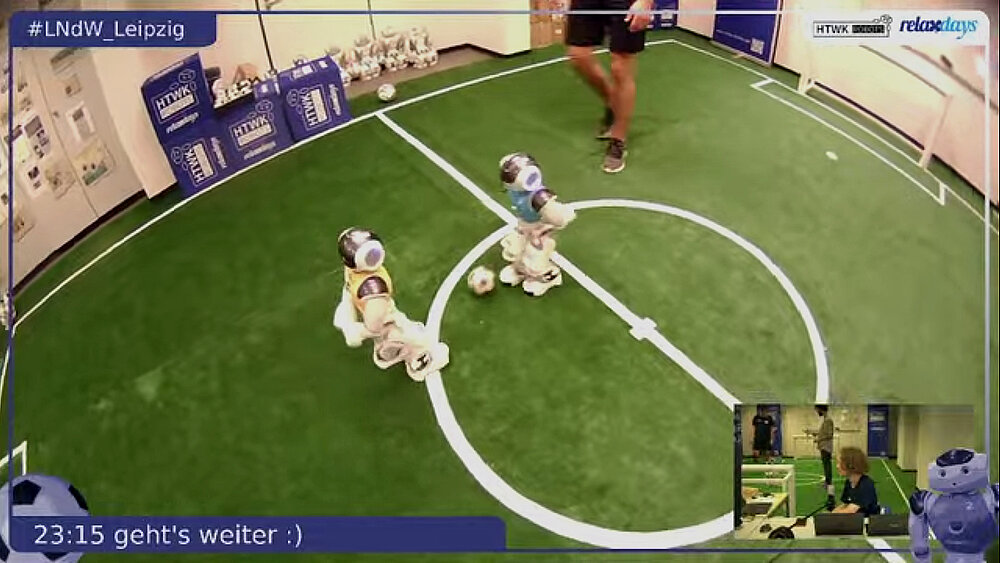
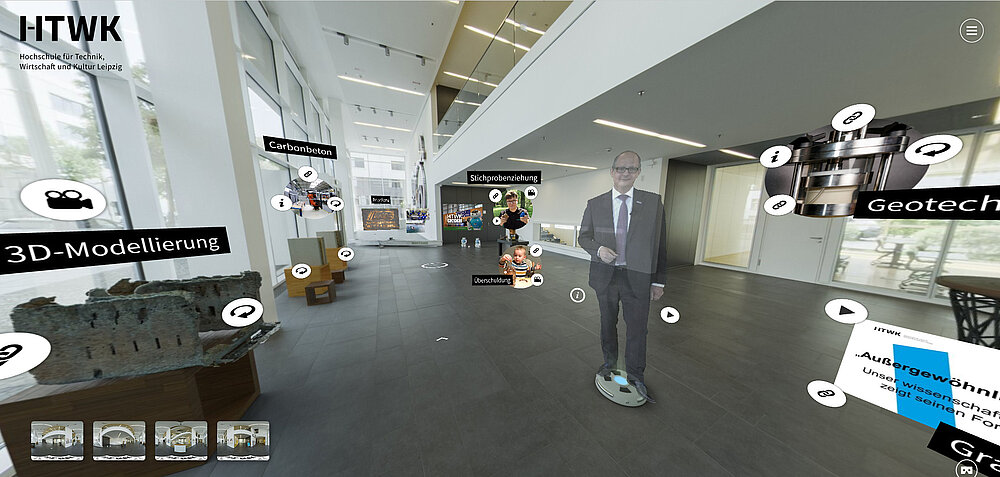
From the comfort of your sofa to the university with just one click – that was possible at the first virtual Long Night of Science. From 6 pm on Friday 16 July 2021, visitors were able to explore the Nieper Building online, which had been transformed into a virtual exhibition space. HTWK Rector Mark Mietzner, who appeared as a hologram much like in the ‘Star Wars’ films, welcomed them with the question: ‘Have you always wanted to know why our university builds canoes out of concrete, or how a football-playing robot becomes a world champion?’ Answers to these questions and many other interesting topics were on offer until midnight.
Due to the coronavirus pandemic, the major event was held online. Nevertheless, almost all of Leipzig’s research institutions took part and, together with the City of Leipzig, put together a varied programme featuring almost 400 presentations. The City of Leipzig estimates that, despite it being a warm summer’s evening – the first without mask-wearing or testing requirements – up to 7,000 children and adults took part.
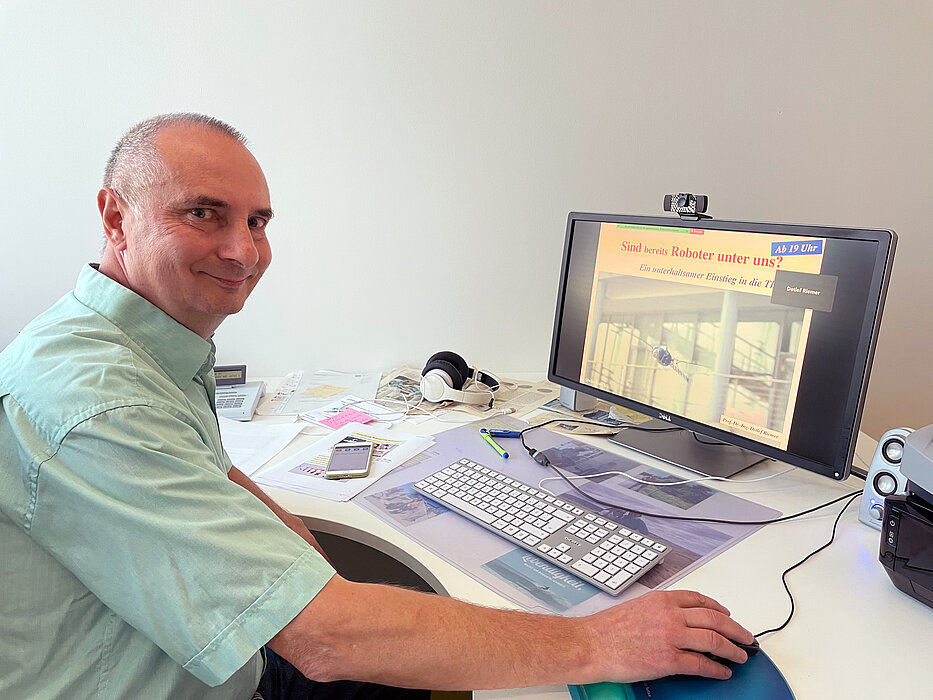
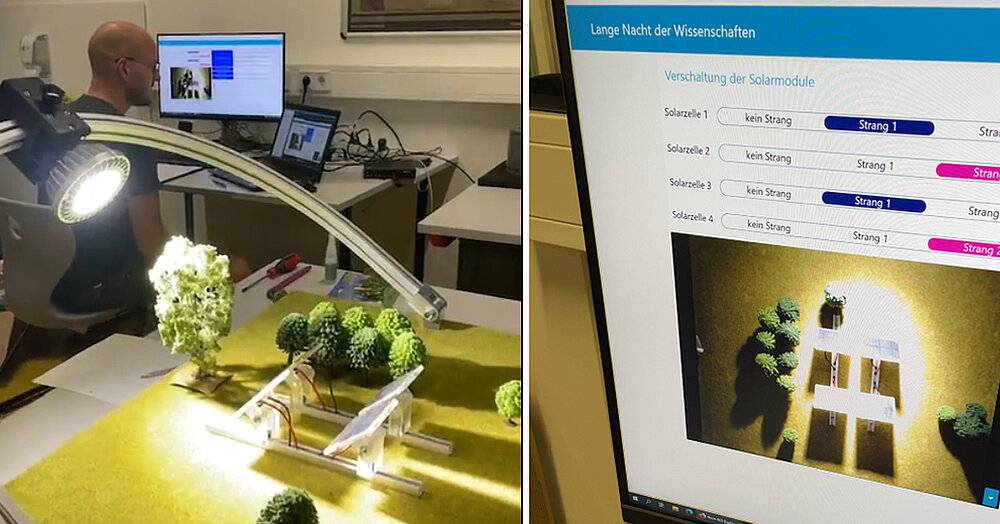
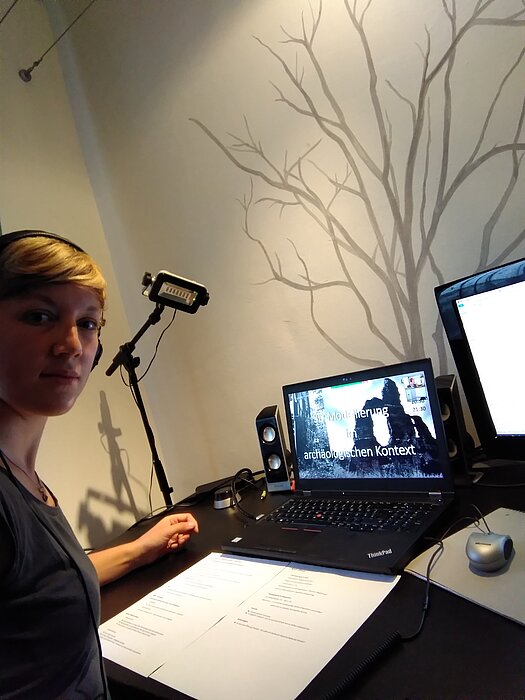
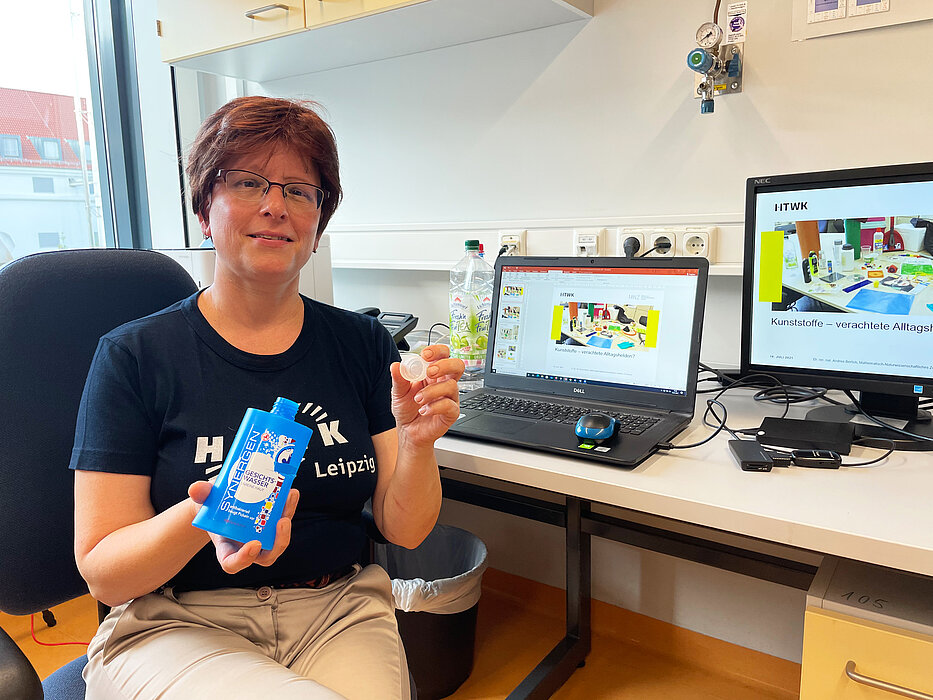
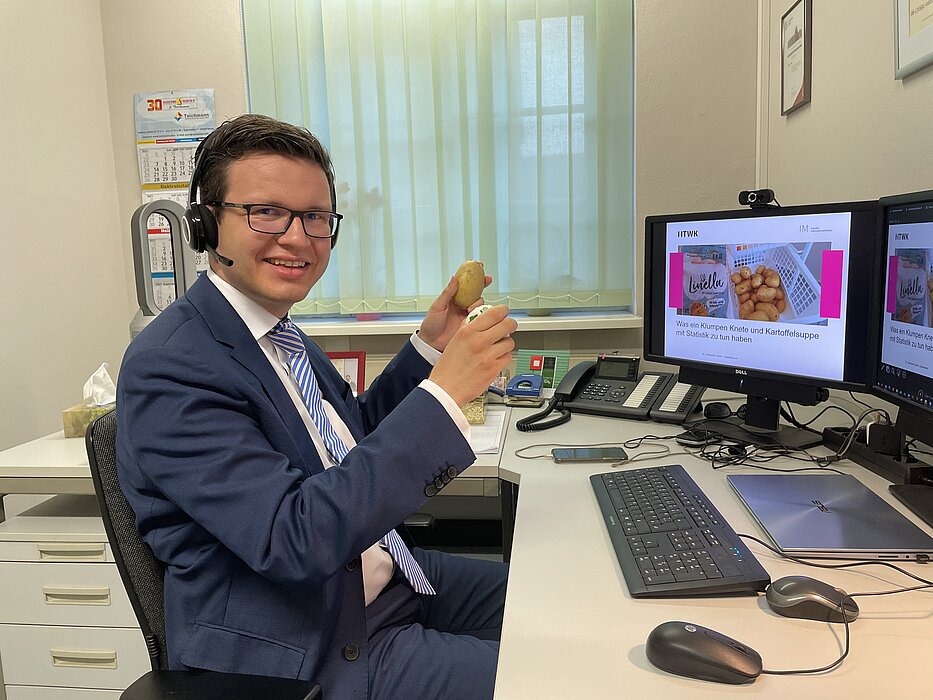
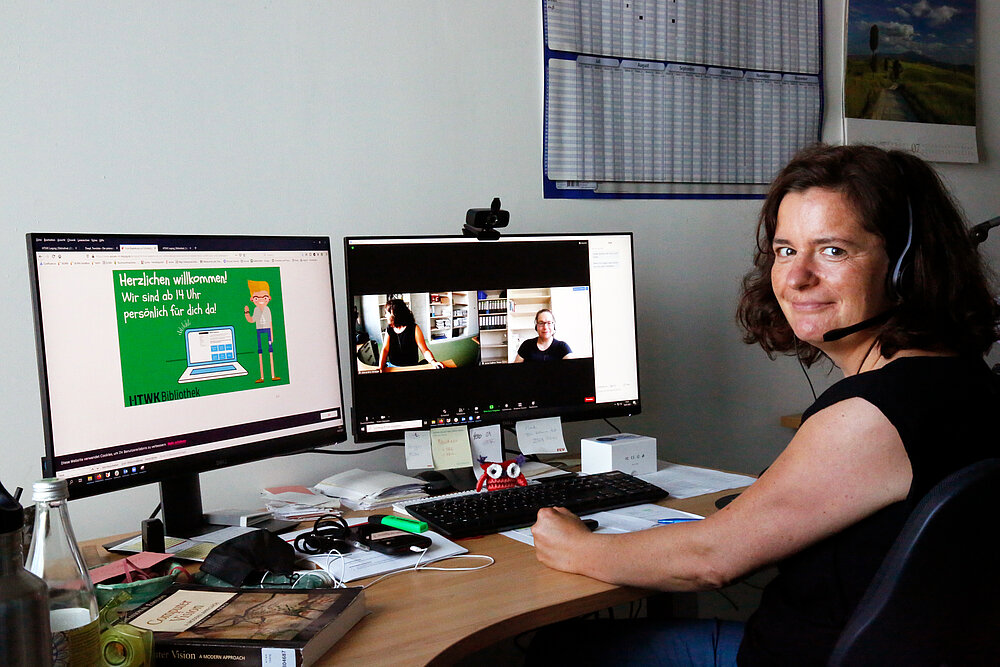
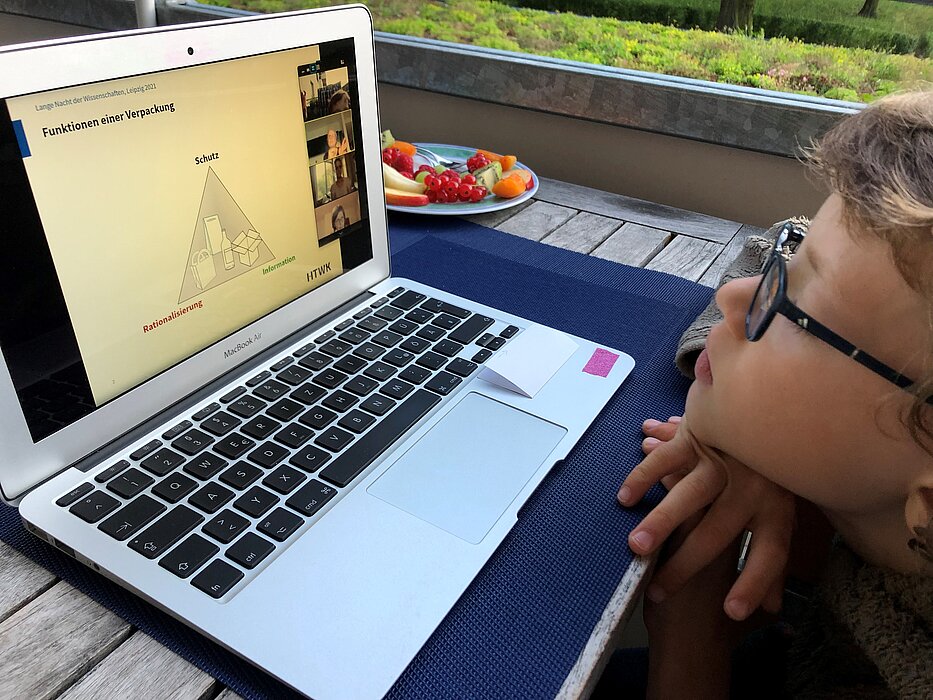
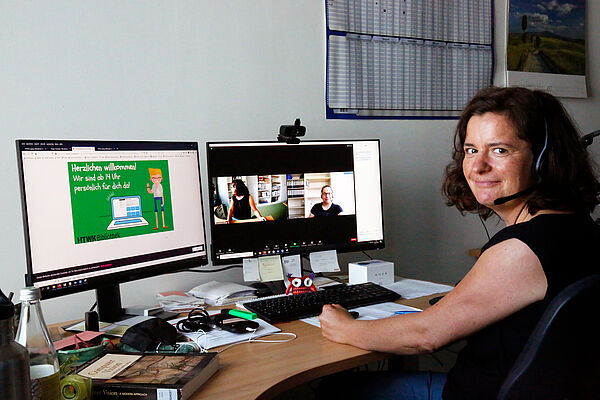
At HTWK Leipzig, too, professors, staff and students from 20 teaching and research departments got involved. Instead of exhibition stands, this time they set up their broadcast studios in laboratories, offices or at home. HTWK Leipzig’s live events, interactive formats and pre-recorded videos were viewed over 1,600 times.
I had a lot of fun and learnt something new again
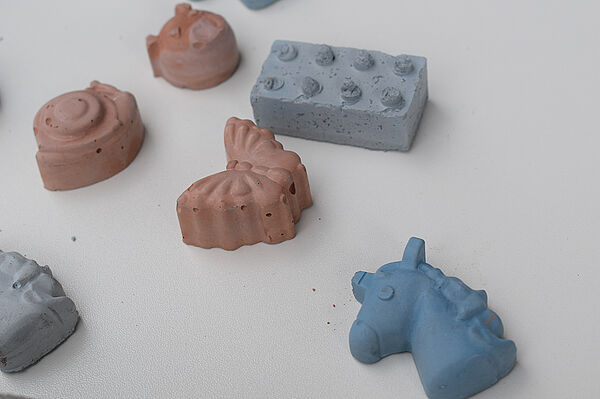
The activities for children were particularly popular. The craft kits, which allowed children to make fridge magnets out of concrete, sold out quickly. Both children and parents thanked Ludwig Hertwig from the concrete canoe team “for the brilliant idea”, as they had “a lot of fun”. Hertwig explains: “The craft activity gave the children the chance to learn about concrete as a building material. You can make lots of things with concrete these days, such as building canoes or integrating optical fibres.”
The staff at the university library were also delighted to see more than 200 children taking part in a digital treasure hunt. During the event, the 9- to 13-year-olds were able to test their knowledge of the internet, social media and computer games through various activities. Around 50 children collected their prize at the end: a radio play to download.
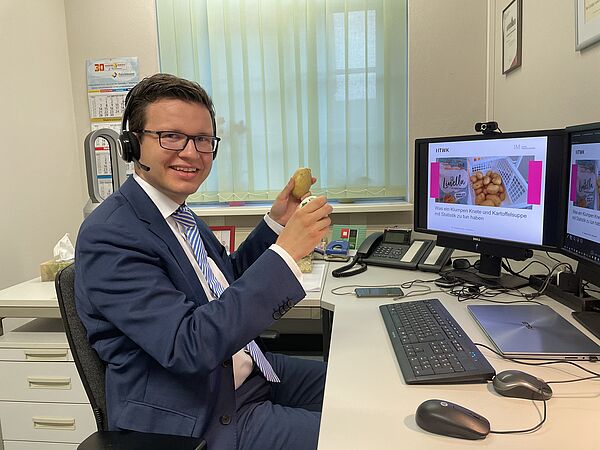
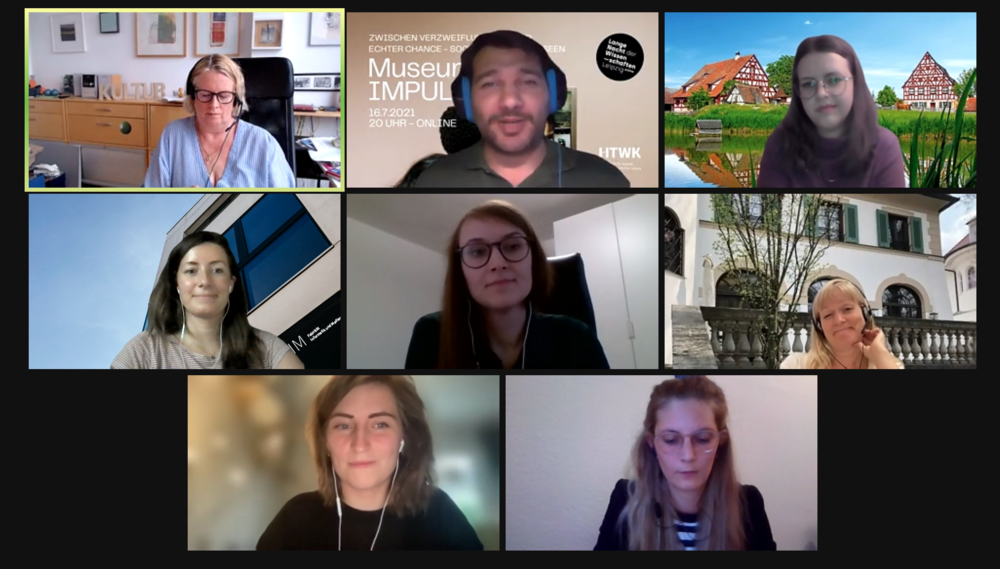
Adults were able to attend various online talks, workshops and live demonstrations. In small and large groups, visitors spoke with experts on topics such as solar energy, electric mobility, sustainable packaging, social media in museums, artificial intelligence and 3D modelling in the construction industry. Many a guest learnt something new in the process, as was mentioned here and there in the chat. HTWK laboratory engineer Lukas Kube presented his specialist field for the first time at the Long Night of Science – 3D printing in mechanical engineering: “Thanks to the manageable number of visitors, I was able to go into great detail. I was particularly pleased that even pupils from the upper years were interested in the topic.”
Streams, videos and platforms that are still available online
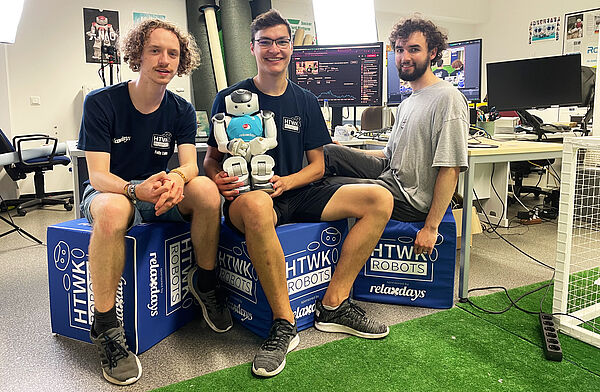
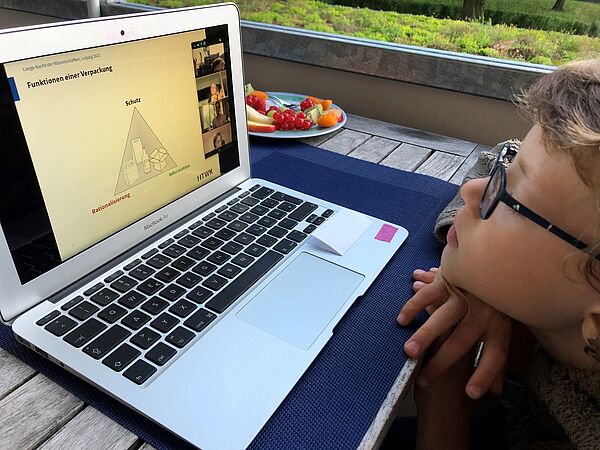
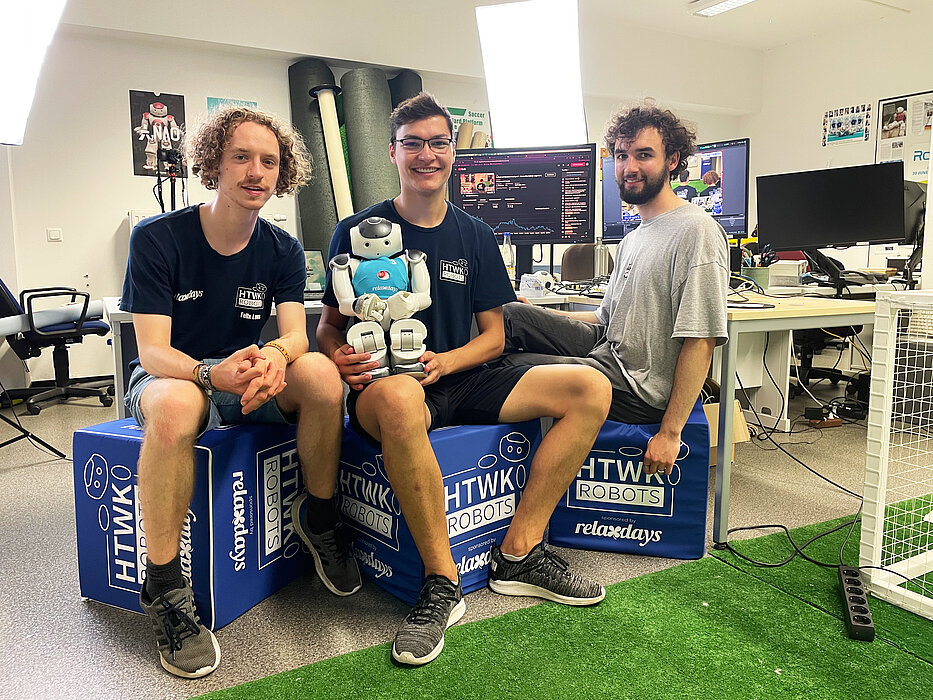
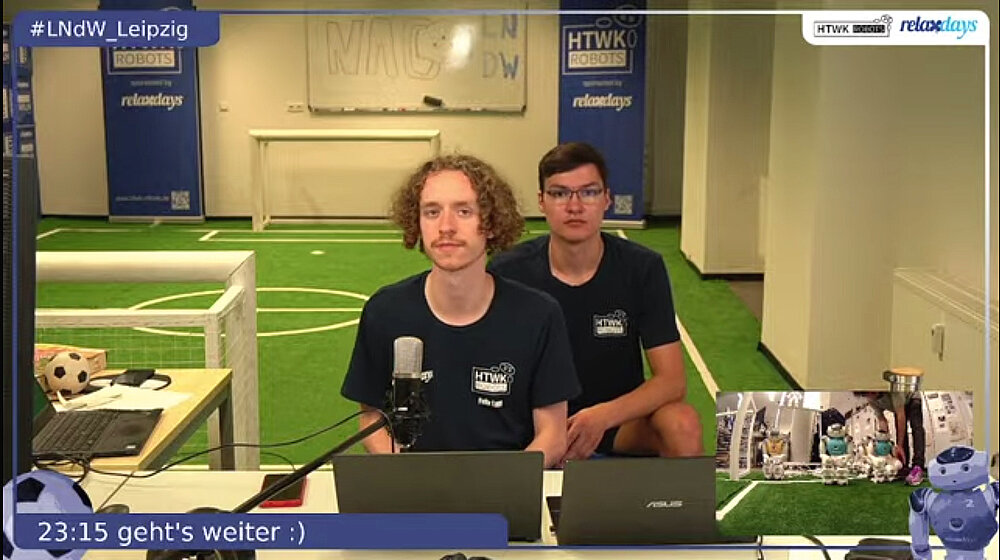
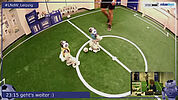
Some content is still available online. For example, as well as the digital treasure hunt, the full live stream of the HTWK Robots is available on YouTube. All the videos – including a concert by the HTWK Orchestra and the results of the PhD student competition ‘Außergewöhnlich angewandt’ – can also still be accessed.
The virtual geotechnical laboratories and the digital showroom on carbon concrete are also available in the long term. The virtual exhibition space also features 3D models, for example of components made from carbon concrete or of an HTWK building. To ensure visitors can experience the virtual spaces to the full, HTWK Leipzig had previously distributed cardboard virtual reality headsets to interested parties.
There was something in person, though …
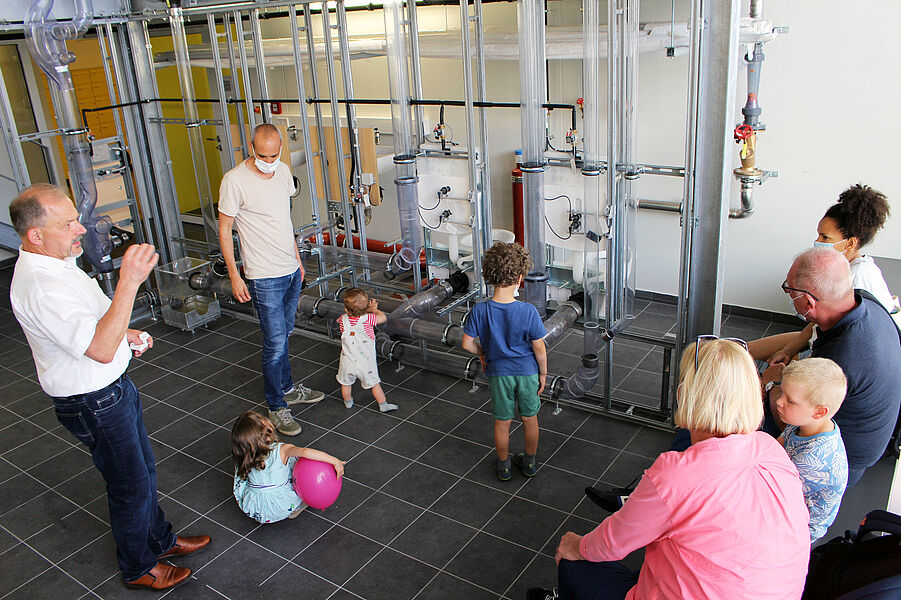
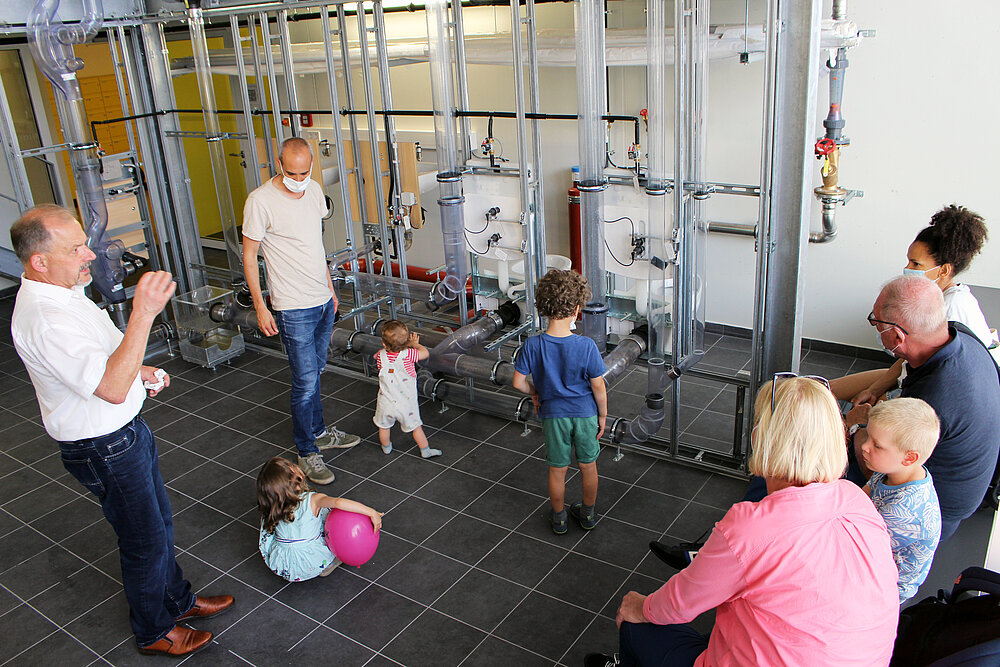
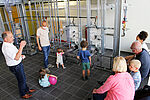
However, not everything took place online. At HTWK Leipzig, three in-person guided tours were held through the sanitary engineering laboratory. The children and adults marvelled at the three-storey sewage system and were surprised to learn how such a system works and what needs to be borne in mind when flushing the toilet. “As a layperson, you’re always surprised at just how complex some seemingly simple systems – such as a pipework system – actually are, and what external factors play a role in how they function,” said Olivia de Almeida, a museology student at HTWK Leipzig.
We hope that, at the next Long Night of Science, even more research areas will be able to open their doors to the public. We will announce the next date in early 2022 in the usual place.
Some highlights from the Science Night at HTWK Leipzig