Project management

- Section:
- FB
- Phone:
- +49 341 3076-6267
Climate-friendly construction using carbon – interior plaster made from clay and biochar
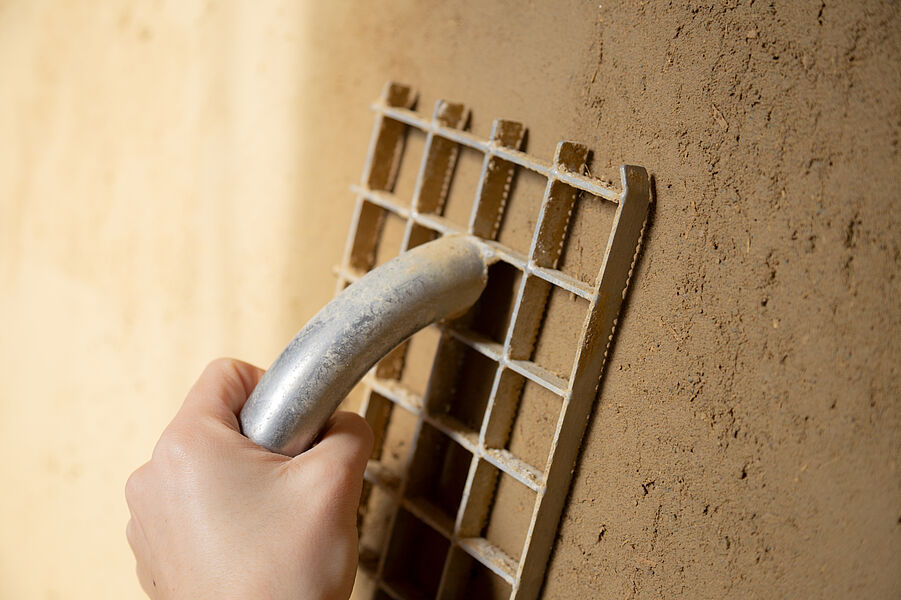
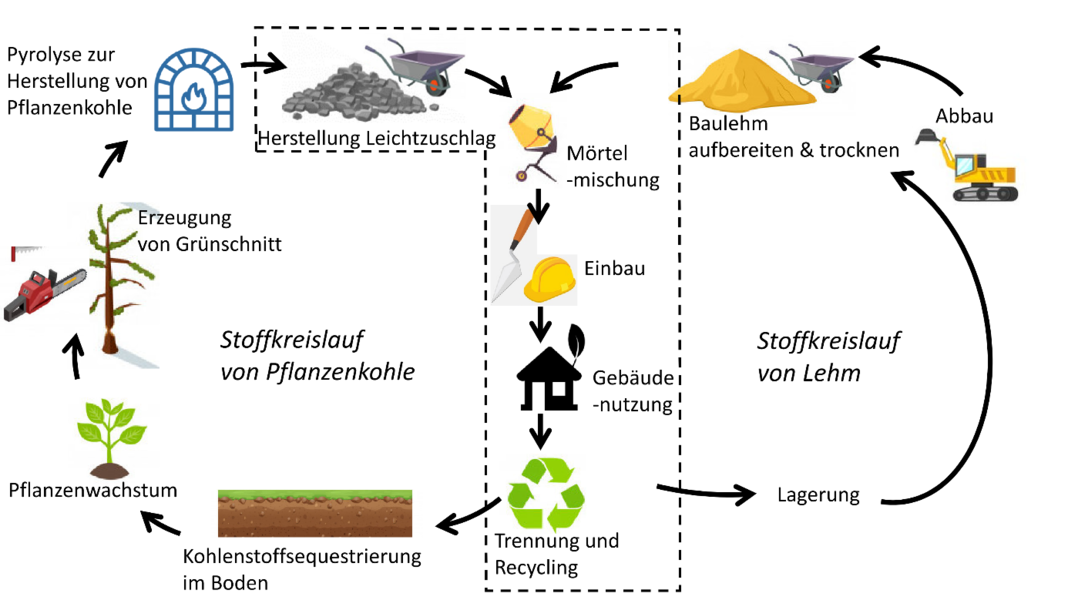
The German government’s goal is to achieve climate neutrality by 2045. Last year, the building sector in Germany failed to meet its emissions reduction target. So-called CO₂ sinks are necessary to offset unavoidable residual greenhouse gas emissions. In addition to wood, regionally sourced biochar is a reliable CO2 sink. Through technical pyrolysis, rapidly decomposable urban green waste, amongst other things, is converted into long-term stable carbon. This is used as a building material, particularly as a granular component for clay plaster.
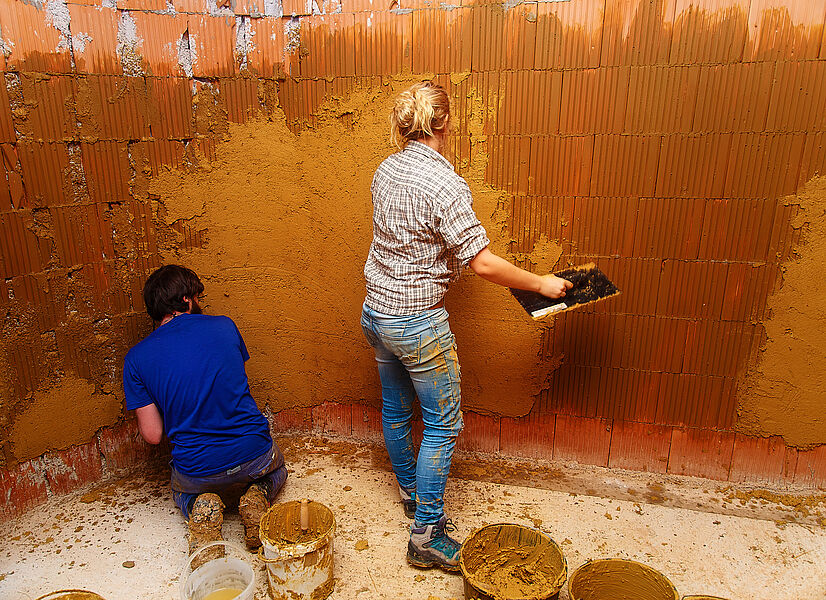
The proposed project aims to develop a clay plaster with biochar aggregates as a climate-friendly and ecological alternative to conventional, emission-intensive plasters (cement, gypsum, lime plaster). The R&D focuses on adapting biochar for use as a CO2 sink in the construction sector.
Secondly, the role of the biochar lightweight aggregates in the clay plaster is to act as a buffer for indoor humidity, ensuring a pleasant and consistent indoor climate and thus providing users with a sense of comfort throughout the year. The biochar-clay plaster is also intended to fulfil a dual function, binding not only humidity but also odours and fine dust from the air, whilst shielding against electromagnetic pollution. This is intended to enhance the quality of the indoor environment.
The third and final R&D focus examines ease of demolition and recycling. The aim is a recyclable product in which the biochar is separated from the clay, which is then used for a long time as a CO2 sink via a secondary route. In this way, the project development promotes the consistent avoidance of waste and the disposal of construction rubble in landfills.
About the Solid Construction Research Group at the Institute for Concrete Structures
Project team
- Section:
- FB
- Phone:
- +49 341 3076-6267
Funding