Exploring the seabed and identifying risks using new technologies
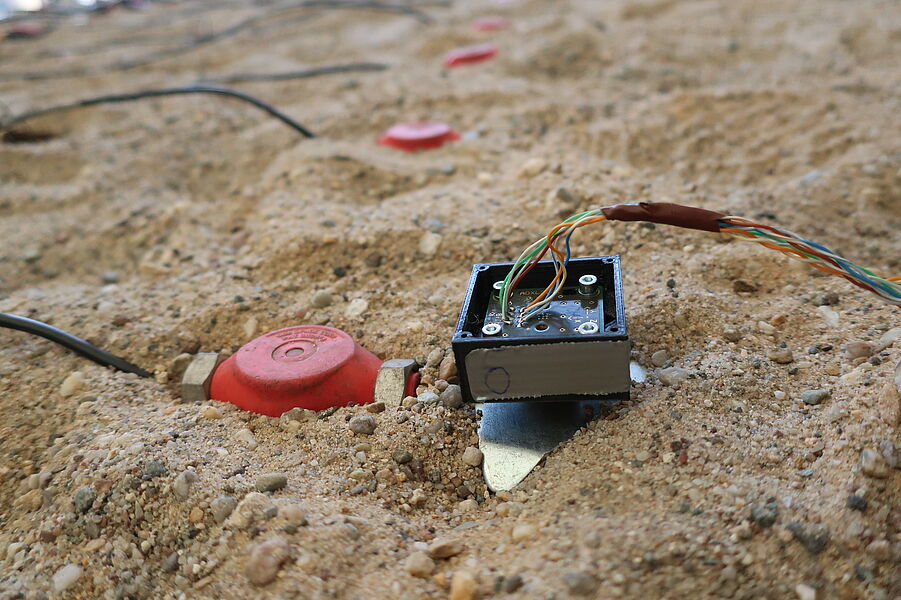
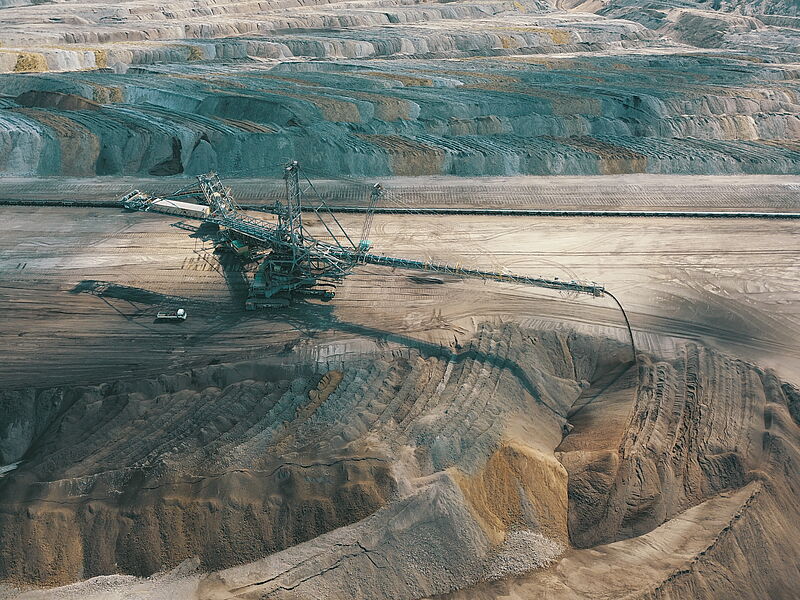

In order to assess the bearing capacity of the subsoil and the risk of failure scenarios, such as a slope failure, a ground investigation is required. In addition to drilling and probing, geophysical techniques are increasingly being used as non-destructive methods. In seismic exploration, transducers are used to analyse ground waves generated by external disturbances such as earthquakes. This information enables specific conclusions to be drawn about the ground conditions and the level of risk. In this project, highly sensitive MEMS technology is being tested for this purpose. Compared to established systems, multiple parameters can be determined simultaneously, and the possibilities for data processing are significantly expanded. The aim is to use this technology in the restoration of former mining sites. The structures there are considered to be at extreme risk of failure and require large-scale monitoring measures.
During the project, the sensors will be tested in comparison with geophones – the current standard in seismic exploration – in several model experiments at the soil testing facility at the Eilenburger Straße Research Centre. The aim here is to demonstrate that the new technology offers an increased range of functions whilst reducing costs. With the aid of artificially generated or natural ground waves, the aim is to localise anomalies in the subsurface and determine soil parameters for calculations.
The GEONETIC research and transfer group specialises in the development of innovative measurement technology in a geotechnical context. Staff from the Energy and Information Technology research area are developing the necessary sensor components. The required geophysical expertise is provided by the collaborating industry partner GGL Geophysik und Geotechnik Leipzig GmbH.
Initial trials in the geotechnical field demonstrate the suitability of highly sensitive accelerometers for detecting subsurface waves. A particular challenge currently remains in achieving a self-sufficient power supply whilst simultaneously capturing and processing hundreds of thousands of data points per second. The necessary test trials are currently being expanded step by step in terms of the number of sensors and ground condition scenarios.