Geotechnical and environmental monitoring
The ‘smart grains’ project series focuses on the incremental product development of a sensor-based measurement system for use in addressing geotechnical and environmental issues. The aim of the project is to develop pebble-sized, modular, intelligent and self-sufficient measuring nodes that can be deployed in large numbers across the ground surface for monitoring purposes. In future, these nodes are intended to be able to fulfil various monitoring tasks in four main areas in a practical and cost-effective manner through targeted parameter determination:
- geotechnical monitoring, e.g. determination of soil parameters for stability assessments
- environmental monitoring, e.g. optimising sustainable yields through the monitoring of agricultural sites
- vibration and emission measurements in structural monitoring
- process optimisation in construction, e.g. control of filling operations and compaction measures
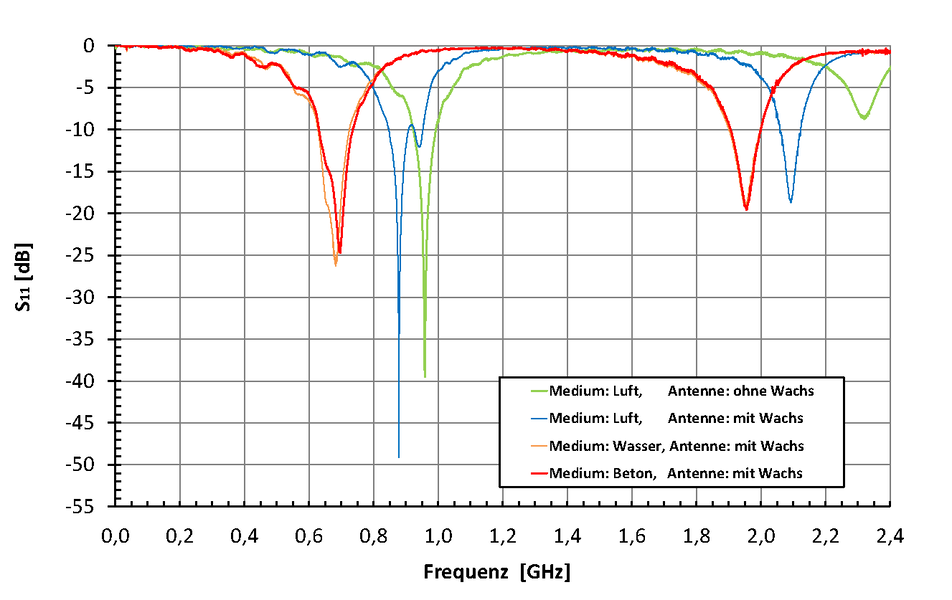
In the currently ongoing preliminary research project “smart grains density”, development is focused on the wireless communication of sensor modules in the soil medium. By analysing the wave characteristics of emitted electromagnetic radiation, it should be possible to simultaneously classify soil conditions and detect changes in the soil in real time. The work is being carried out by an interdisciplinary team of electrical and civil engineers from the GEONETIC research and transfer group.
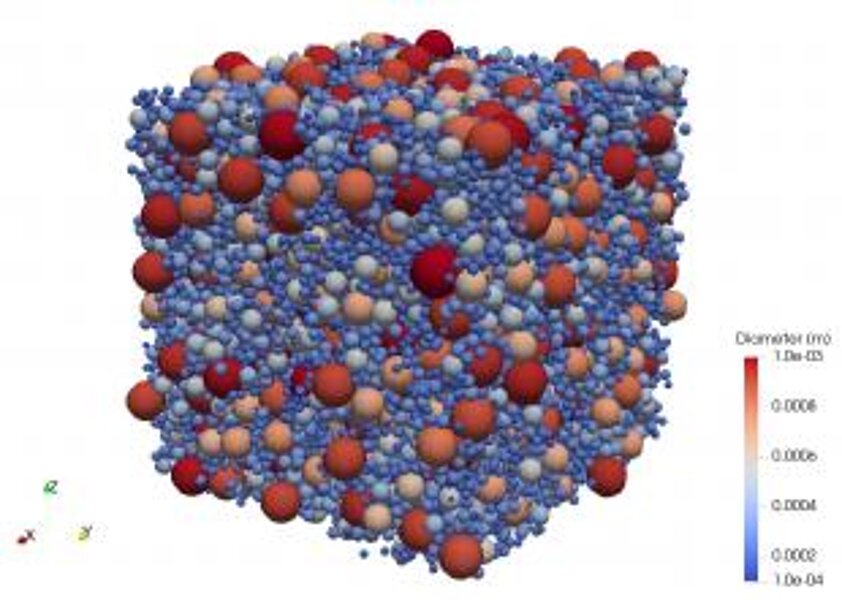
Following the design and manufacture of the sensor modules, multi-scale model tests are being conducted, in which a wide variety of soil mechanical boundary conditions can be simulated. These investigations are supplemented by digital modelling using the Discrete Element Method (DEM) to describe microscopic processes in the soil.