Project management

Heritage Building Information Modelling (HBIM) – Using standard tools for building research and heritage conservation
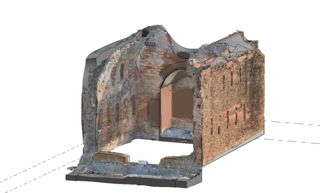
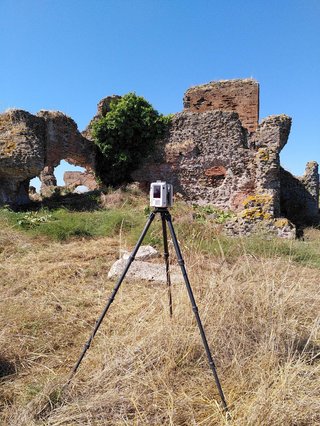
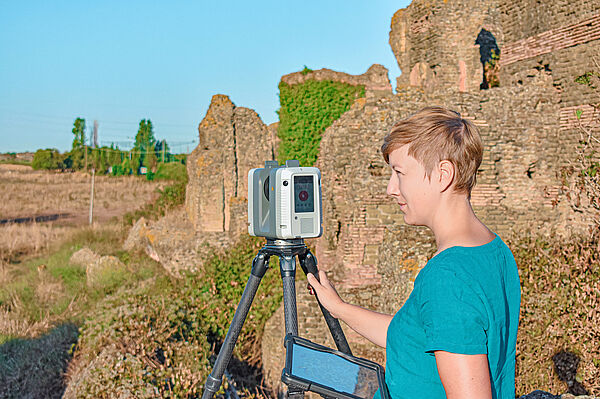
The Villa of Sette Bassi in Rome (Italy) is one of the largest stately villa complexes from the Roman Imperial period. It was built in the mid-2nd century and has survived to this day, albeit in a state of ruin. The villa complex consists of stately residential and bath buildings, a large enclosed garden known as the Hippodrome, a cistern and other freestanding structures. The entire complex is being photogrammetrically surveyed and scanned in several building survey campaigns. In collaboration with colleagues from the Technical University (TU) of Berlin, the villa complex is being documented, construction phases identified, and a reconstruction of the complex developed. The aim is also to further develop building research methods and to test the possibilities of Heritage Building Information Modelling (HBIM). Funded by the German Research Foundation (DFG), the project has been underway since April 2020 in collaboration not only with the Department of Historical Building Research and Conservation at TU Berlin but also with the Rome Branch of the German Archaeological Institute and the Parco Archeologico dell’Appia Antica.
The preliminary building survey and subsequent building documentation are fundamental components of historical building research and practical heritage conservation, as the building itself is the most valuable source of data on its history and condition. Although building documentation methods have been established in Germany for many decades, they appear to be developing only slowly. They are largely based on the creation of room books and 2D plans, or use 3D models almost exclusively as a presentation tool. Whilst Building Information Modelling (BIM) is becoming the standard in building construction, this is not the case in heritage building information modelling (HBIM). Information models of historic buildings or sites could make a significant contribution to documentation, planning and management if the available BIM tools are applied and modified accordingly. Exploring the possibilities and limitations of this BIM technology for building research and heritage conservation is at the heart of this research project.
Project team
Partners
- Technical University of Berlin
- German Archaeological Institute, Rome
- Appia Antica Archaeological Park
- Additional project lead: Prof. Thekla Schulz-Brize (TU Berlin, Research Group for Historical Building Research and Conservation)