
Project managemet

- Section:
- FB
- Phone:
- +49 341 3076-6950
A reliable geotechnical BIM model for areas undergoing structural change through the use of artificial intelligence, machine learning and cloud technology (GeoKIM)
Lignite mining in the Central German mining region has left behind vast tracts of land which, as part of structural change, are to be put to safe and sustainable use. The so-called spoil heaps present a particular challenge. These are huge areas of loosely piled soil, the composition of which varies greatly and whose stability is difficult to predict. However, for new uses – such as commercial development, energy projects or nature reserves – reliable information on the bearing capacity of the subsoil is required.
GeoKIM aims to be able to assess the stability of these spoil heaps much more reliably and quickly in future. To date, important information about the subsoil has been lacking in many areas, as traditional soil investigations are only carried out at specific points and may overlook local weak spots. This poses risks for construction projects and can lead to delays and higher costs. A better data foundation is therefore crucial for safely developing these sites for new uses as part of structural change.
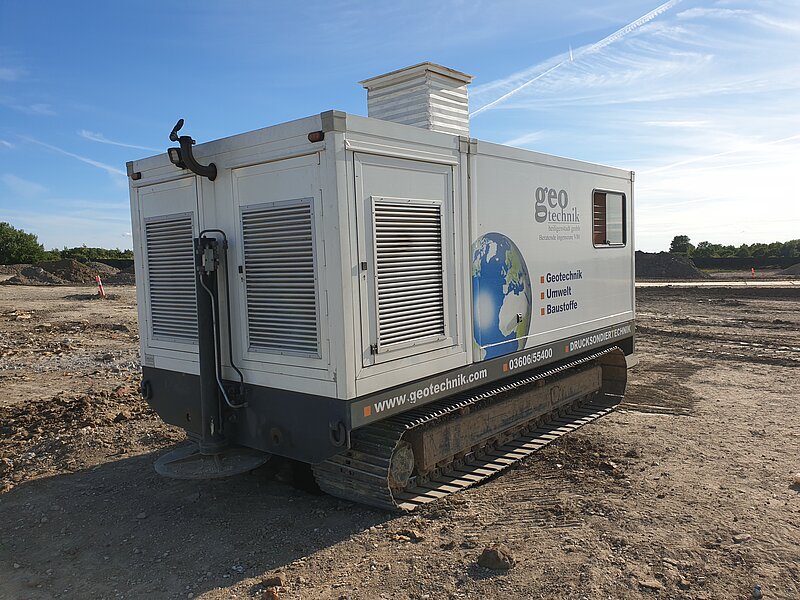
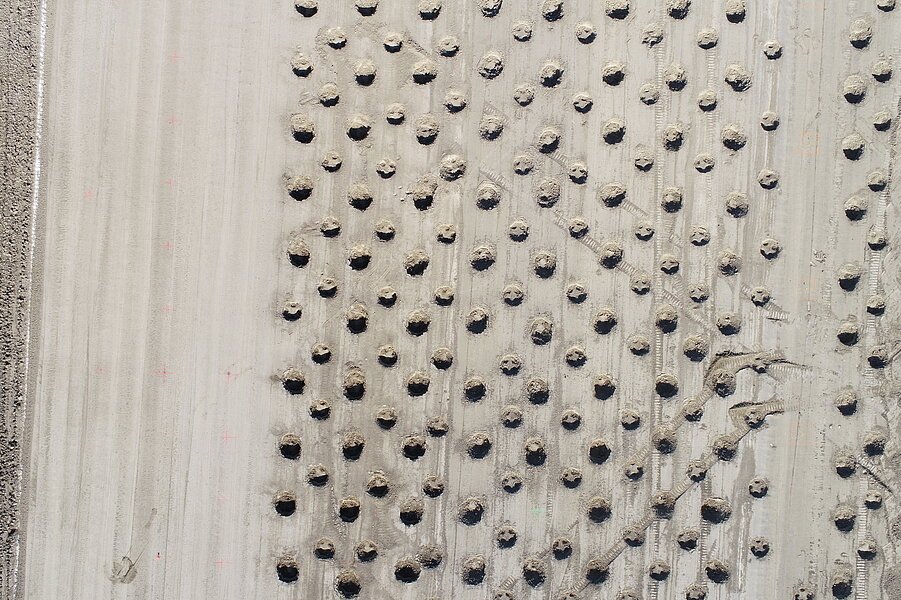
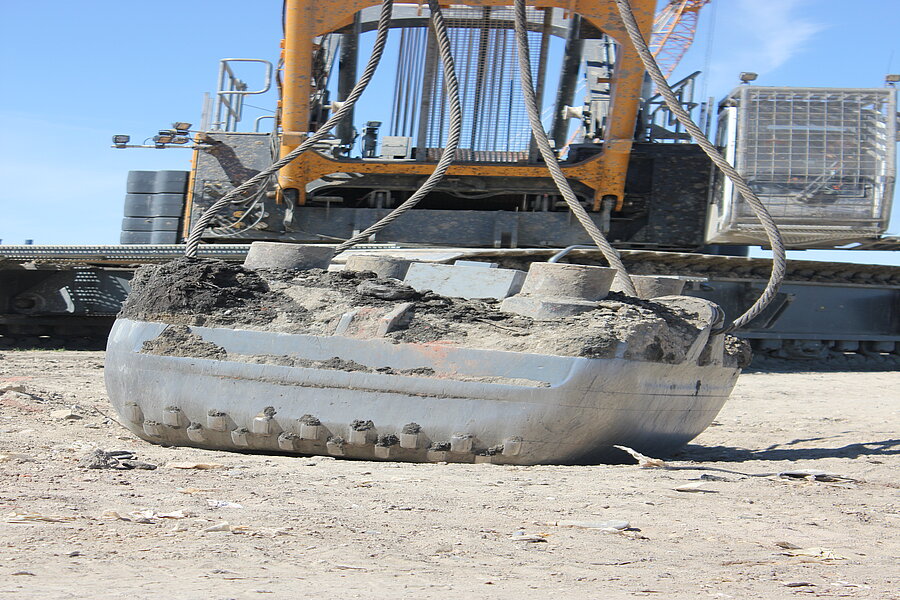
The core of the project lies in consolidating data from different measurement and acquisition levels into a single digital evaluation chain. In addition to traditional geotechnical investigations, such as cone penetration tests, data density is increased primarily by utilising additional measurements from soil compaction. These are generated automatically during remediation work and are recorded directly on the construction machinery in use via sensors. These are supplemented by precise surface models captured using drones. All this information is to be transmitted in real time via an IoT system to an edge cloud, analysed there using AI and statistical methods, and subsequently merged into a high-resolution 3D model of the building site.
A technology demonstrator is being set up for this purpose at the geotechnical open-air test site of HTWK Leipzig (GeoTechnikum), where the digital measurement and data processing chain will be tested and further developed. This brings together geotechnical expertise, modern sensor technology and AI know-how. The aim is to test the technology in as practical a setting as possible.
GeoKIM enables a significantly more precise digital image of the ground. This increases planning reliability when developing former spoil tip sites and helps ensure that these can be used for new purposes sooner and more safely.


