Hydrogen as a medium for future technologies


Hydrogen technologies play a key role in the transition to a sustainable future, particularly in the transformation of the energy system. For this reason, the GreenHydroSax early-career research group is investigating issues relating to the energy transition and the conservation of natural resources that are linked to the use of hydrogen. These include not only the production and use of hydrogen as a storage medium, but also the application of its chemical properties in various processes.
The research project focuses on four key objectives:
- Development of suitable detection and analysis methods for the relevant fields of application and modelling of the developed processes with the aim of optimising them:
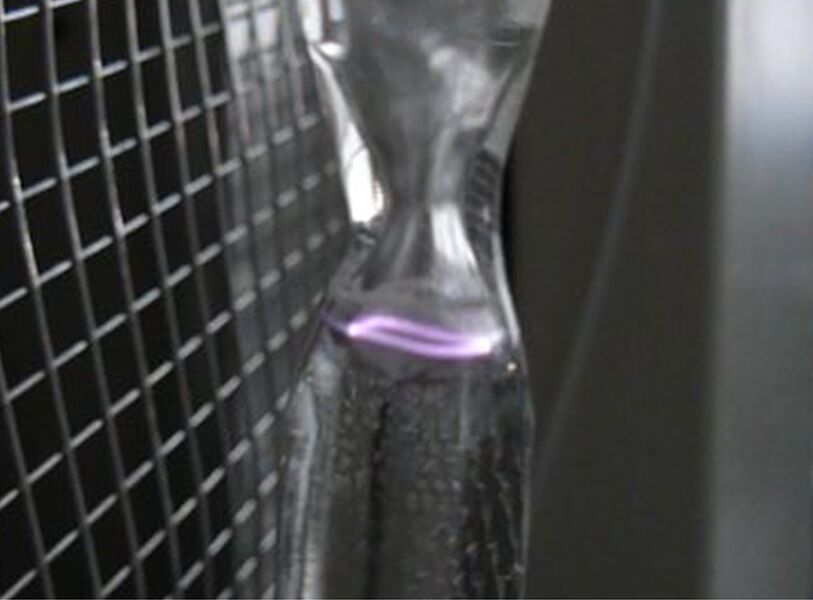
Hydrogen can be produced not only by direct current electrolysis, but also by high-frequency electromagnetic fields. For this purpose, a glass reactor filled with an electrolyte solution is positioned between two parallel electrodes and exposed to alternating fields in the radio wave range. A key advantage of this setup is that the electrodes are located outside the liquid. This means, for example, that seawater or contaminated wastewater can be used for hydrogen production without further pre-treatment, whereas water for conventional electrolysis methods must be of high purity. The implementation of the process using various liquids, the quantification of the H2 yield and energy balancing are the key research topics of the GreenHydroSax group. - Development of a selective sensor for measuring hydrogen concentration in natural gas
To transport hydrogen from the point of production to consumers, it can be blended with natural gas and the existing gas network utilised. This requires, among other things, sensors capable of selectively measuring hydrogen in natural gas. The so-called catalytic spillover effect is a suitable measurement principle for this purpose. The aim of the project is to analyse the effect from a metrological perspective and to develop a prototype suitable for practical application. An initial prototype was created as part of a Master’s thesis. The next steps involve further investigation of the measurement principle as well as the material and metrological implementations. Finally, a sensor is to be tested under real-world conditions in collaboration with partners. - Elimination of pollutants through catalytic processes using hydrogen as a reaction medium
In the past, various, mostly toxic chemicals were used to preserve art and cultural objects. These can pose a risk to humans, but can also cause long-term damage to the art objects in question. Hydrogen is to be used to reductively convert the pollutants into less toxic compounds. Research is being conducted into a process in which hydrogen is catalytically activated to break down biocides. The advantage of the process is that it can take place without prior extraction and under ambient conditions. - Investigation of the release of critical chemicals from building materials and development of remediation strategies
In building construction, biocides contained in building materials are intended to prevent fungi, lichens and microorganisms from growing on facades. The use of these chemicals complicates the reuse of building materials (recycling/cascade use) as well as their disposal. Furthermore, the pollutants can be leached out due to weathering (leaching), meaning they are washed into soil and water bodies in environmentally significant concentrations. Work is therefore underway on a method to investigate the leaching behaviour of building products. In addition, strategies for breaking down the leached pollutants using reactive hydrogen are to be tested.
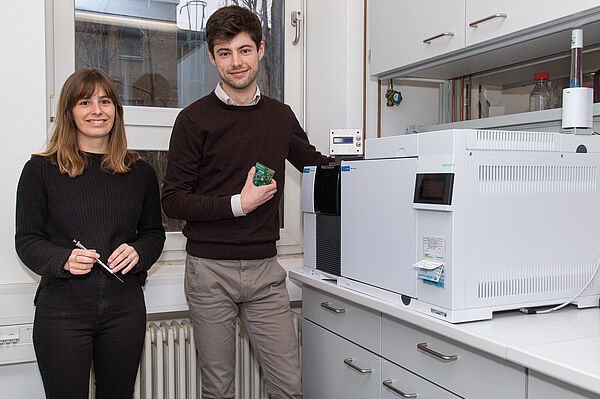
Project team


Funding