Angewandte Umweltforschung: Wasserstoff, Insektizide, Gebäudeschadstoffe
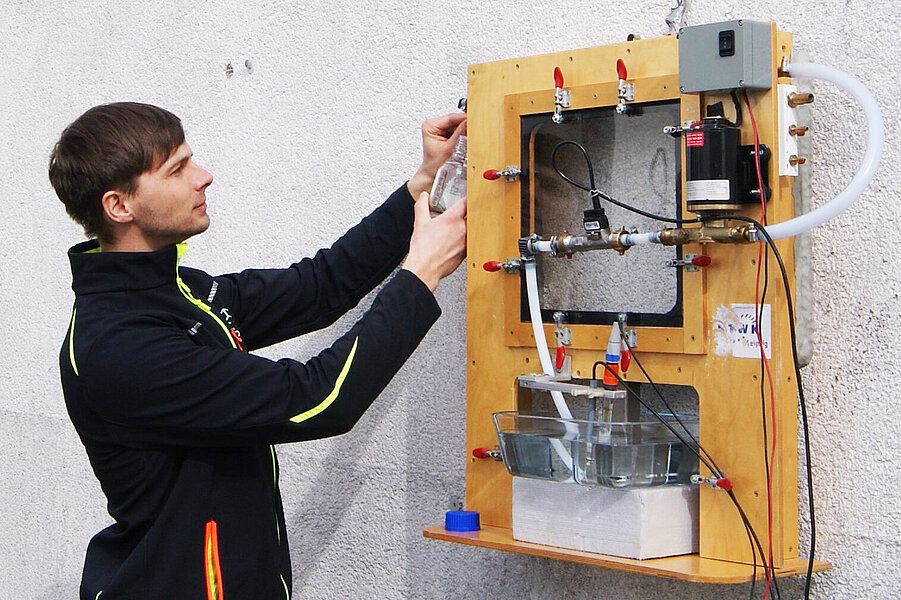
Auf dem Weg in eine nachhaltige Zukunft spielen die Transformation des Energiesystems und der Abbau von Umweltschadstoffen eine tragende Rolle. Aus diesem Grund beschäftigt sich die Nachwuchsforschungsgruppe GreenInnoSax mit Fragestellungen im Rahmen der Energiewende und des Schutzes natürlicher Ressourcen. Diese umfassen nicht nur die Erzeugung und Verwendung von Wasserstoff als Speichermedium, sondern auch die Nutzung seiner chemischen Eigenschaften für den Abbau von Schadstoffen in Gebäuden und an Kunstgütern.
Die aktuellen Projekte von GreenInnoSax umfassen folgende Forschungsgebiete:
- Umwelttechnologie: Eliminierung von Schadstoffen in Kunstobjekten durch katalytische Prozesse
- Nachhaltiges Bauwesen: Untersuchung des Austrages von kritischen Chemikalien aus Baustoffen und Entwicklung von Sanierungsstrategien
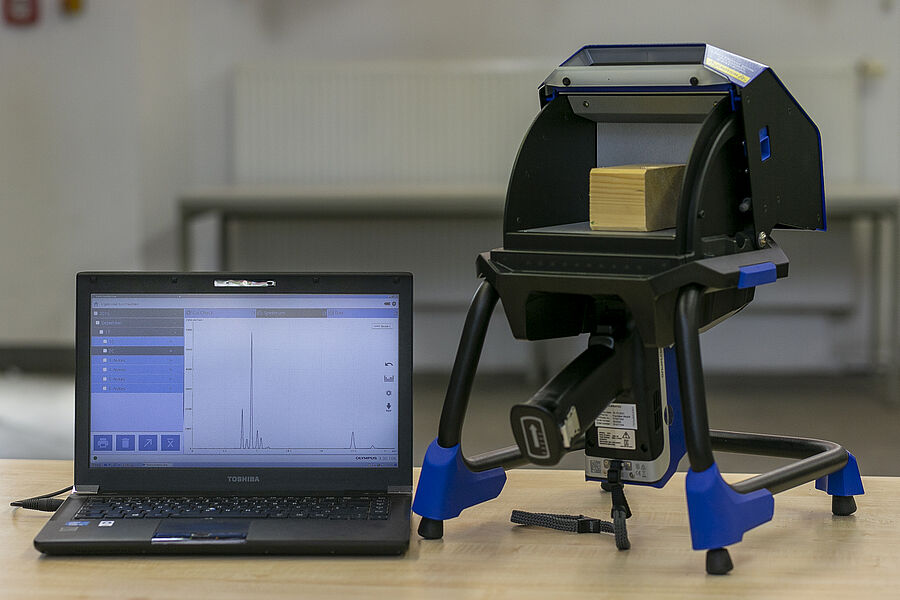
- Zerstörungsfreie Prüfung von Bauteilen: Identifizierung von Salz- und Schadstoffbelastungen mittels Impulsradarmessung (Georadar) und Röntgenfluoreszenzanalyse (RFA) zur Lebensdauerbewertung und vereinfachten Bestimmung von Recyclingpotenzialen
- Analytik: Entwicklung von adäquaten Nachweis- und Analysenverfahren
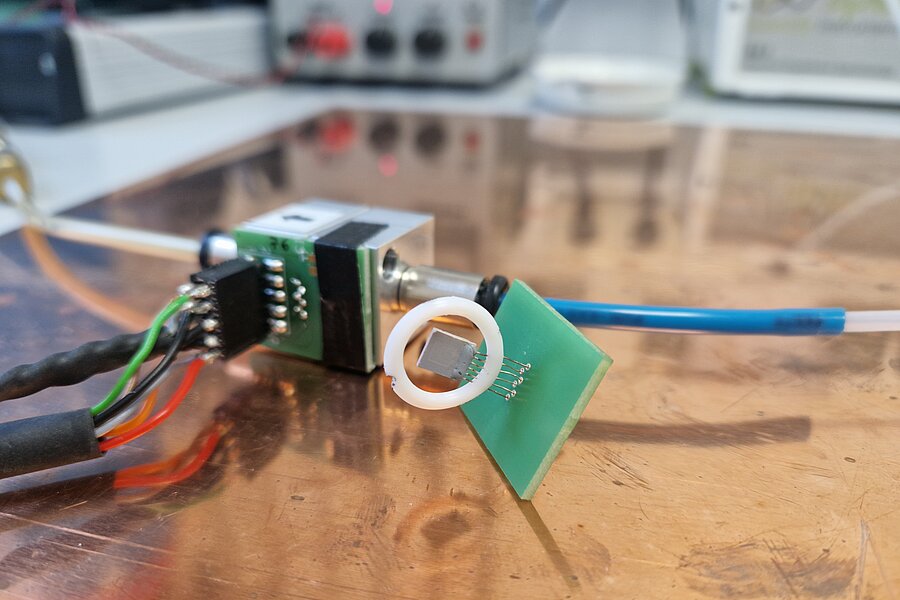
- Wasserstofftechnologie: Entwicklung eines selektiven Wasserstoffsensors für die Detektion in reduzierenden Medien

Project management

- Section:
- FB
- Phone:
- +49 341 3076-6511
Applied environmental research: hydrogen, insecticides, building pollutants
The transformation of the energy system and the reduction of environmental pollutants play a key role in the transition to a sustainable future. For this reason, the GreenInnoSax early-career research group focuses on issues relating to the energy transition and the protection of natural resources. These include not only the production and use of hydrogen as a storage medium, but also the utilisation of its chemical properties for the degradation of pollutants in buildings and on cultural artefacts.
GreenInnoSax’s current projects cover the following research areas:
- Environmental technology: Elimination of pollutants in art objects through catalytic processes
- Sustainable construction: Investigation of the release of critical chemicals from building materials and development of remediation strategies
- Non-destructive testing of building components: Identification of salt and pollutant contamination using pulse radar measurement (ground-penetrating radar) and X-ray fluorescence analysis (XRF) for service life assessment and simplified determination of recycling potential
- Analytics: Development of suitable detection and analytical methods
- Hydrogen technology: Development of a selective hydrogen sensor for detection in reducing media
Project team
Project management and supervisors
- Section:
- FB
- Phone:
- +49 341 3076-6511
Supervising professor

- Section:
- MNZ
- Phone:
- +49 341 3076-3427