


Innovation and sustainability through the use of radio wave technology
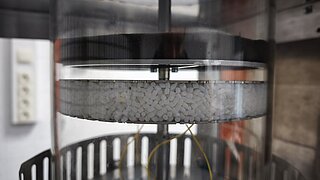
Innovative and sustainable products and processes are being developed in Saxony, drawing on the region’s existing research and development capabilities to harness the unique potential of radio wave technology. RadioWaveSaxony is generating opportunities for the Saxon economy to achieve long-term economic success, drive the transition towards greater sustainability and resource conservation, and create future-proof jobs in the region. The combination of sustainable innovation and a skilled workforce will develop RadioWaveSaxony into a technology platform for Saxon companies as well as for national and international partners.
Radio wave technology allows various materials to be heated in a controlled manner and, where necessary, rapidly to process-dependent target temperatures. In this process, heat is introduced into the volume of the materials without a transfer medium. There is therefore no limitation due to heat transport from the surfaces, which brings advantages for many applications. Compared to microwave applications, significantly larger volumes can be heated on an industrial scale, and it is also possible to heat dry materials.
The energy input is based on the interaction of the electromagnetic waves with polar structures within the materials. The dielectric parameters are therefore the key parameters for the application of radio wave technology, which is why measurement methods for determining them are also being developed within the project.
Depending on the specific application and the geometric boundary conditions encountered, different electrode systems and electromagnetic shielding must be employed. Special measurement technology, such as fibre-optic temperature sensors, is used for process control; these are also developed within RadioWaveSaxony and applied in a system-specific manner.
A particular advantage of radio wave technology is that it can replace fossil fuels with a high degree of flexibility, provided the electrical energy is generated from renewable sources. This leads to a reduction in the carbon footprint of the processes and enhances sustainability across the various fields of application.

Partners
- RWInnoTec GmbH
- Pfennig Bau GmbH & Co. KG
- Karsten Püschner Wood Workshop
- ROX GmbH
- Intronik GmbH
- Institute for Diagnostics and Conservation of Monuments in Saxony and Saxony-Anhalt e.V.
- Helmholtz Centre for Environmental Research – UFZ
- Leipzig University of Applied Sciences (HTWK)
- Chemnitz University of Technology
