Project management

- Section:
- FB
- Phone:
- +49 341 3076-6267
Recyclability of steel fibres in steel fibre-reinforced concrete
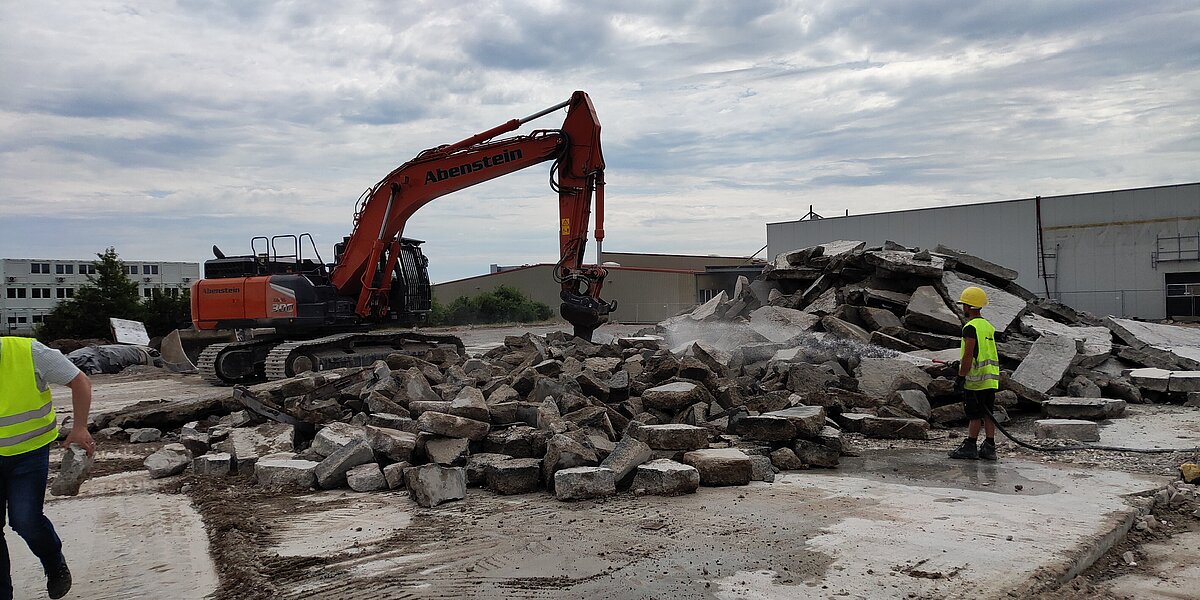
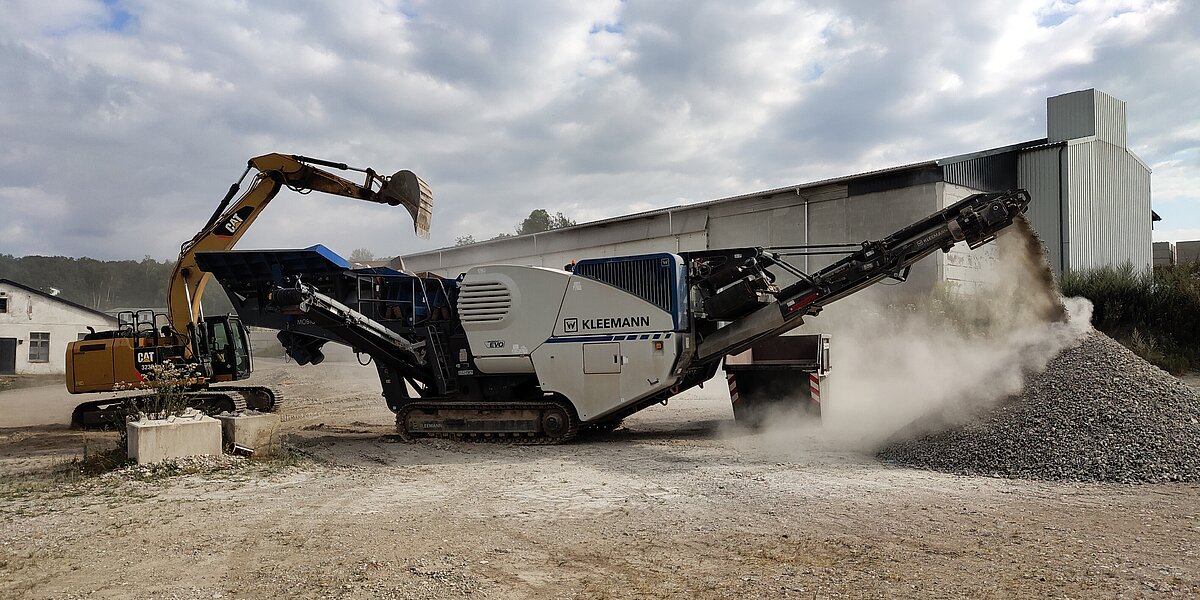
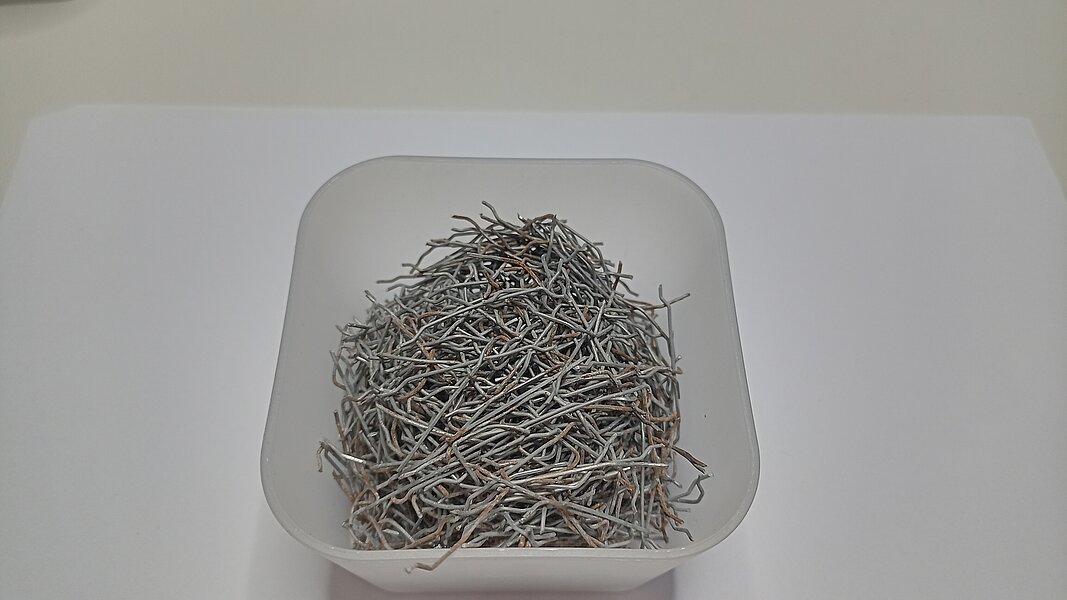
Steel fibre-reinforced concrete (SFRC) has been in use since the 1960s, and has been used on a large scale in industrial floors for industrial buildings for around 25 years. There are already industrial floors in Germany with an estimated volume of 50 million cubic metres of SFRC. The recycling of these enormous quantities of concrete remains unresolved, as there are no practical strategies or concepts for recycling SFB. Current concrete recycling plants and strategies are designed exclusively for normal concrete with bar-shaped steel reinforcement. In this process, the steel fibres remain largely bound to the concrete rubble after crushing and the subsequent magnetic separation. This reduces the chances of both the steel fibres and the recycled concrete being reused in a circular economy. At present, there are no known practical solutions for separating steel fibres and concrete rubble into pure fractions. The mere use of current crushing or impact techniques is not sufficient to enable adequate and reproducible separation of the steel fibres. There are only a few rudimentary laboratory
studies in the literature on the recycling of steel fibre-reinforced concrete (SFRC). For instance, only a single publication (Bru et al., ‘Investigation of lab and pilot scale electric-pulse fragmentation systems for the recycling of ultra-high performance fibre-reinforced concrete. In: Minerals Engineering 128 (2018), pp. 187–194) mentions so-called electrodynamic fragmentation as a method for crushing SFB and separating the steel fibres it contains from the surrounding concrete. Using this method, the researchers succeeded in separating 30% of the 14 mm long steel fibres used in the study in a first treatment step and 60% in a second treatment step. However, the energy consumption of this process is very high. The process has not yet been tested outside of scaled-down pilot and laboratory plants. An industrial application for concrete recycling is therefore not yet possible.
The project aims to achieve the recycling of steel fibre reinforced concrete components (SFR-C components) through the selective separation of concrete rubble and steel fibres by utilising and further developing standard concrete crushing methods, specifically crushing or impact crushing. The recovered concrete rubble, separated from the steel fibres, can be reused as aggregate in so-called recycled concrete. The recovered steel fibres are also to be put to appropriate use.
The degree of separability of concrete rubble and steel fibres is to serve as a metric for qualifying the purity of the fractions in the developed recycling processes. With regard to the reusability of the concrete rubble as aggregate, the remaining steel content can be used for classification. The performance of recycled steel fibres as reinforcement in new steel fibre concrete can be assessed based on the achieved flexural strength.
The concrete rubble recovered from steel fibre concrete and separated from the steel fibres can then be reused as aggregate in so-called recycled concrete (RCB). Unlike reuse as a filler in road and civil engineering, this does not constitute downcycling. The use of RCB covers all areas of modern reinforced concrete construction, thereby guaranteeing equivalent use and demonstrating a fully functional circular economy for steel fibre concrete. The recovered steel fibres are also to be put to appropriate use. The focus here is on their reuse in concrete. This enables material-appropriate recycling and optimal value creation, which would not be achieved if the fibres were simply melted down as steel scrap.
The project contributes to improving the resource efficiency and recyclability of steel fibre concrete (SFB) as a building material. The planned development can make a significant contribution to improving sustainability in the construction sector, even when viewed on a societal scale.
As it is currently not possible to separate concrete rubble and steel fibres by type, neither the steel fibres nor the concrete rubble can be recycled in a manner equivalent to their original application. The fibres still adhering to the concrete rubble prevent the concrete fragments from being used as recycled aggregates in recycled concrete (RCB) for building and civil engineering structures, as the metal content in the recycled material is strictly limited by guidelines and standards. At the same time, the steel fibres still contained in the concrete rubble are not available for metal recycling. Furthermore, fibres that have actually been separated can currently only be melted down as steel scrap and thus ‘downcycled’. The validation project, however, aims to lay the foundations for full reuse in equivalent applications and to enable SFB as a whole to contribute to a sustainable circular economy. The project should therefore be viewed in the context of the wider societal challenge of conserving and reusing resources.
Project team
- Section:
- FB
- Phone:
- +49 341 3076-6267